Can I tell by looking at it?
The tooth may look unchanged.

Subluxation is increased tooth mobility after injury without displacement from the socket position. There may be bleeding at the gumline. Examination looks for associated injury to the root, crown or bone.
For training & practice ↓
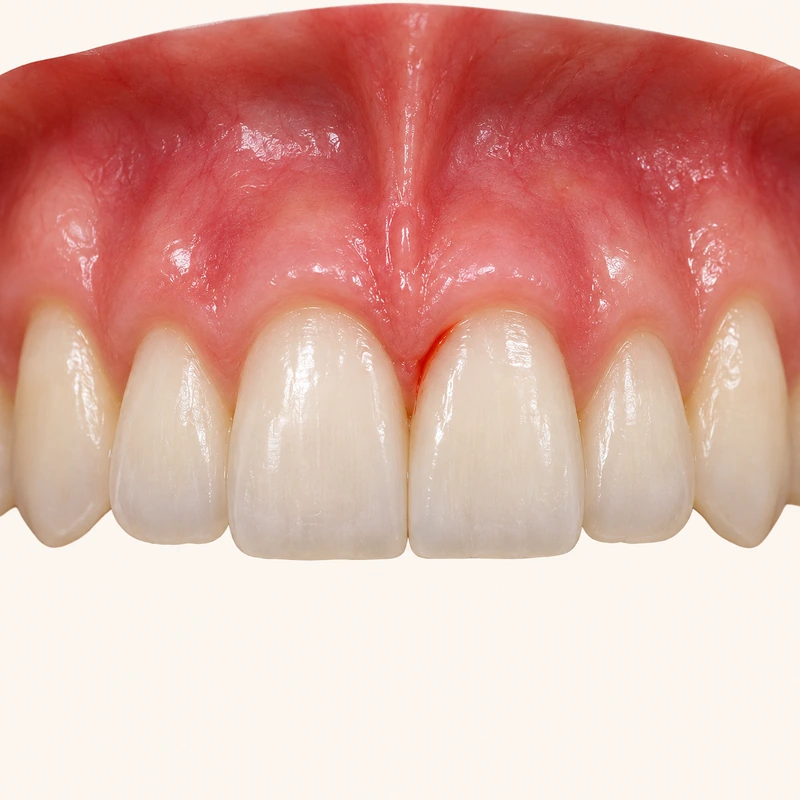
The crown may sit exactly between its neighbours. Its mobility relative to nearby teeth helps identify the injury.
Bleeding from the small crevice around the tooth can accompany damage to the supporting tissues. It need not be present.
Follow-up is often sufficient. Marked mobility or tenderness on biting may justify temporary flexible splinting.
The tooth may look unchanged.
Minor mobility often does not require a splint.
A lack of response to an initial cold test does not prove pulp death.
Three steps. No audio.
Each scene can also be selected manually.

Silent educational film with German on-screen text and simplified teaching images. Not a patient case or a promised treatment outcome. The full English explanation is available as text.
An extruded tooth sits partly out of its socket and often looks longer. Subluxation changes mobility without this displacement.
The tooth may look unchanged. The dentist assesses mobility, surrounding gum, bite and any indicated images.
Minor mobility often does not require a splint. Symptoms, the degree of looseness and other injuries guide the decision.
A lack of response to an initial cold test does not prove pulp death. Later tests and other findings guide decisions.
Call promptly if a tooth becomes loose after an injury. A straight-looking tooth can have an associated injury.
A question you could ask
How will you tell whether the tooth is regaining stability?
After a recent dental injury, call a dental practice or an emergency dental service promptly.
Call the practice · 0221 669 401 80Telephone contactAn extruded tooth sits partly out of its socket and often looks longer. Subluxation changes mobility without this displacement.
Editorial research: . General information, not an individual diagnosis or treatment recommendation. Teaching illustrations are simplified and do not depict a patient case.
If you turn this on, this website stores which guides you open, separately from advertising preferences. The markers expire after a fixed 30-day period from activation. The list is not sent to us by this feature. You can turn it off here and delete the markers.
Other people using the same browser profile can also see the markers. German and English versions share one marker. Expired entries are removed the next time you open a page with this feature; deleting browser data may remove them earlier. “Viewed” means opened, not read or completed.