Removable?
Yes.

An activator is a removable functional orthodontic appliance, usually made as a single acrylic body with wire components. The classic Andresen–Häupl design guides both dental arches and holds the lower jaw in a position selected for treatment. It is used for suitable bite problems during growth. Tooth movement, bite development and adherence all contribute to the result.
For training & practice ↓
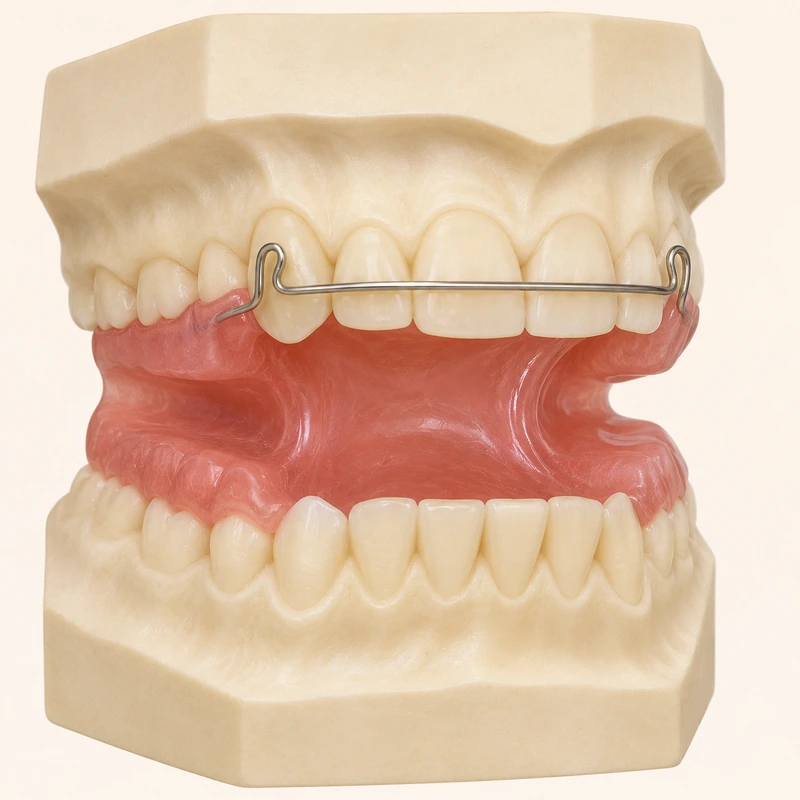
The activator guides the upper and lower arches through a shared acrylic body. Its design follows the findings; it is not an ordinary night-time grinding splint.
A selected jaw relationship forms the basis of the appliance. Different Class II bites need different plans; forcing the jaw as far forward as possible is not a sign of quality.
Reviews assess changes in the bite and tooth positions. Responses vary, and fixed braces or other treatment steps may still be needed afterwards.
Yes.
The classic design is one piece.
No such guarantee can be made.
Three steps. No audio.
Each scene can also be selected manually.

Silent educational film with German on-screen text and simplified teaching images. Not a patient case or a promised treatment outcome. The full English explanation is available as text.
An activator is used in orthodontic treatment of selected bite problems. A bite splint has different aims; similar material does not make it an activator.
The classic activator is one connected appliance. A Twin Block uses two separate plates with interacting bite blocks.
Not automatically. Fit, the chosen jaw position, treatment goals and actual wear matter more than the amount of material.
No. Sore areas, breakage or altered fit need review. Filing or bending it yourself can change the planned guidance.
You can bring this question to your appointment:
Why does an activator suit my findings, and which dental and bite changes are intended?
An individual assessment can clarify the findings and whether referral is needed.
Arrange an assessmentAppointment selection at DoctolibAn activator is used in orthodontic treatment of selected bite problems. A bite splint has different aims; similar material does not make it an activator.
Editorial research: . General information, not an individual diagnosis or treatment recommendation. Teaching illustrations are simplified and do not depict a patient case.
If you turn this on, this website stores which guides you open, separately from advertising preferences. The markers expire after a fixed 30-day period from activation. The list is not sent to us by this feature. You can turn it off here and delete the markers.
Other people using the same browser profile can also see the markers. German and English versions share one marker. Expired entries are removed the next time you open a page with this feature; deleting browser data may remove them earlier. “Viewed” means opened, not read or completed.