Tooth neck near the gum
Exposed cervical dentin may lie directly at the tooth surface.

Exposed dentin has small tubules that can transmit brief pain in response to cold and other stimuli. In a suitable case, a dental sealant can cover openings in the sensitive area.
For training & practice ↓
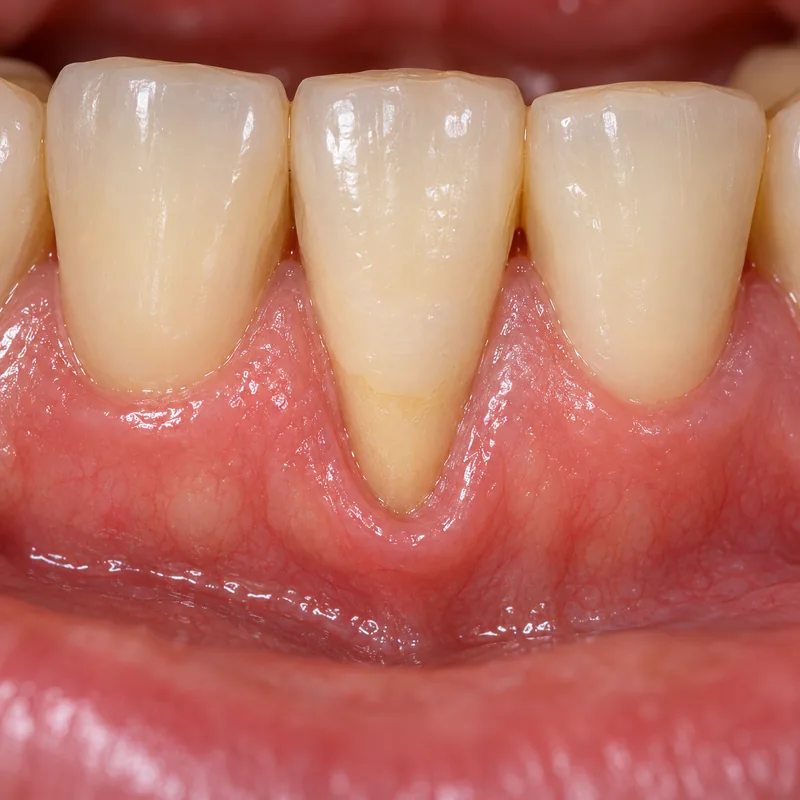
Exposed cervical dentin may lie directly at the tooth surface.
Open dentinal tubules are a potential target for a thin sealant.
Where tooth contour needs rebuilding, a filling can serve a different purpose from a thin coating.
Exposed cervical dentin may lie directly at the tooth surface.
Open dentinal tubules are a potential target for a thin sealant.
Where tooth contour needs rebuilding, a filling can serve a different purpose from a thin coating.
Exposed cervical dentin may lie directly at the tooth surface.
Open dentinal tubules are a potential target for a thin sealant.
Where tooth contour needs rebuilding, a filling can serve a different purpose from a thin coating.
Three steps. No audio.
Each scene can also be selected manually.

Silent film with English on-screen text and simplified teaching images.
Decay or a crack may cause similar symptoms. Describe what triggers the pain, how long it lasts and whether it occurs spontaneously. The cause determines whether sealing is appropriate.
Decay or a crack may cause similar symptoms. Describe what triggers the pain, how long it lasts and whether it occurs spontaneously. The cause determines whether sealing is appropriate.
A thin sealant aims to reduce sensitivity of exposed dentin. A filling can also restore a missing contour. Pain intensity alone does not determine the type of restoration needed.
The response varies. Persistent, worsening or changing pain warrants reassessment. Brushing technique and care of the exposed surface are also relevant.
A question to ask
Does my pain fit exposed dentin or should decay or a crack be investigated?
Choose an appointment to discuss your own tooth or restoration.
Choose an appointmentAppointment selection at DoctolibSealing symptomatic exposed cervical dentin is a different indication from immediate dentin sealing on a freshly prepared tooth for an indirect restoration.
Editorial research: . General information, not an individual diagnosis or treatment recommendation. Teaching illustrations are simplified and do not depict a patient case.
If you turn this on, this website stores which guides you open, separately from advertising preferences. The markers expire after a fixed 30-day period from activation. The list is not sent to us by this feature. You can turn it off here and delete the markers.
Other people using the same browser profile can also see the markers. German and English versions share one marker. Expired entries are removed the next time you open a page with this feature; deleting browser data may remove them earlier. “Viewed” means opened, not read or completed.