Where does the filling sit?
It sits close to the gumline, often on the side facing the cheek or lip.

A cervical filling replaces missing tooth structure where the crown meets the root. Whether it would help depends on the cause, any change in the size of the defect and the symptoms it causes.
For training & practice ↓
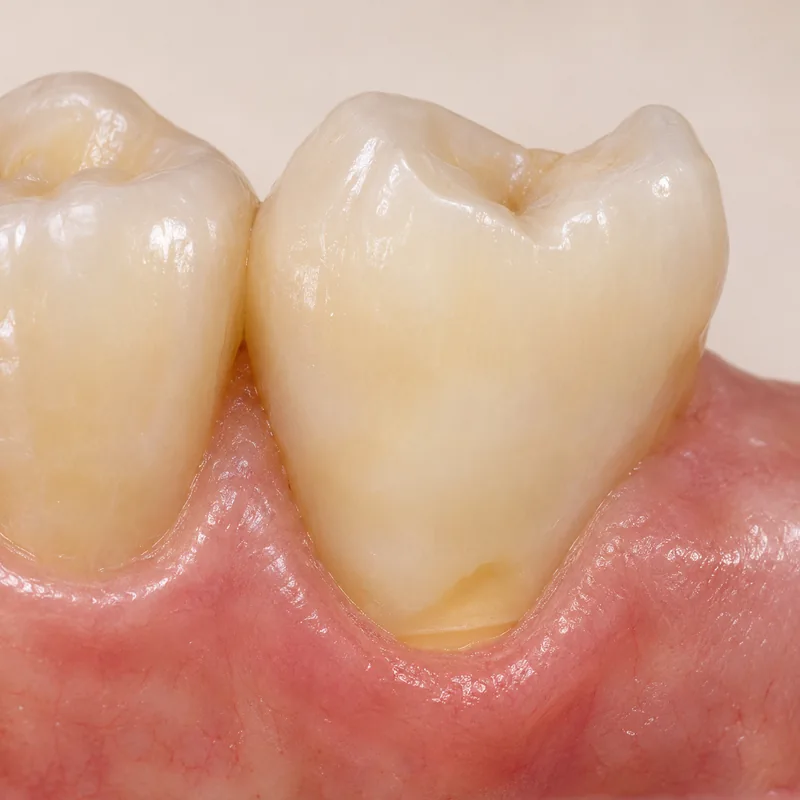
Decay or wear can cause loss of tooth structure near the gumline. An examination helps the dentist identify the cause.
When a filling is appropriate, tooth-coloured composite can replace the missing structure. The dentist smooths the edge where the filling meets the tooth.
At follow-up the dentist checks whether the filling is secure and examines its edges. Mention if cold drinks still make the tooth hurt.
It sits close to the gumline, often on the side facing the cheek or lip.
The cause, changes in the defect and persistent symptoms all matter.
Options include composite resin and glass ionomer-based materials.
Three steps. No audio.
Each scene can also be selected manually.

Silent film with English on-screen text and simplified teaching images.
Gum recession can expose an intact root surface. A cervical defect means some tooth structure is missing as well. Either can be sensitive.
For sensitive exposed dentine, a desensitising toothpaste or sealant may be appropriate. If tooth structure is missing, the size of the defect and changes over time also guide the decision.
Wear can also leave a notch. To assess decay, the dentist examines the tooth surface, including its texture.
It is difficult to predict this for an individual tooth. Clinical studies track how well fillings stay in place and how their edges change. Ask for a check if you feel a rough edge or part of the filling comes away.
A question to bring along
Has this area changed since my previous check-up, and what would a filling achieve in my case?
Have the cause of your gumline sensitivity assessed.
Choose an appointmentAppointment selection at DoctolibA sealant covers sensitive dentine with a thin layer. A restoration rebuilds the missing contour of the tooth.
Editorial research: . General information, not an individual diagnosis or treatment recommendation. Teaching illustrations are simplified and do not depict a patient case.
If you turn this on, this website stores which guides you open, separately from advertising preferences. The markers expire after a fixed 30-day period from activation. The list is not sent to us by this feature. You can turn it off here and delete the markers.
Other people using the same browser profile can also see the markers. German and English versions share one marker. Expired entries are removed the next time you open a page with this feature; deleting browser data may remove them earlier. “Viewed” means opened, not read or completed.