What is shown?
Planned tooth positions on a digital model.

A digital set-up is virtual planning of tooth positions on a three-dimensional dental model. Individual teeth are represented separately and moved on screen to planned positions. This can support discussion of treatment goals and preparation of treatment steps. It is a planning aid, not a reliable prediction of an individual result. Examination, the bite, supporting tissues and actual progress also need to be considered.
For training & practice ↓
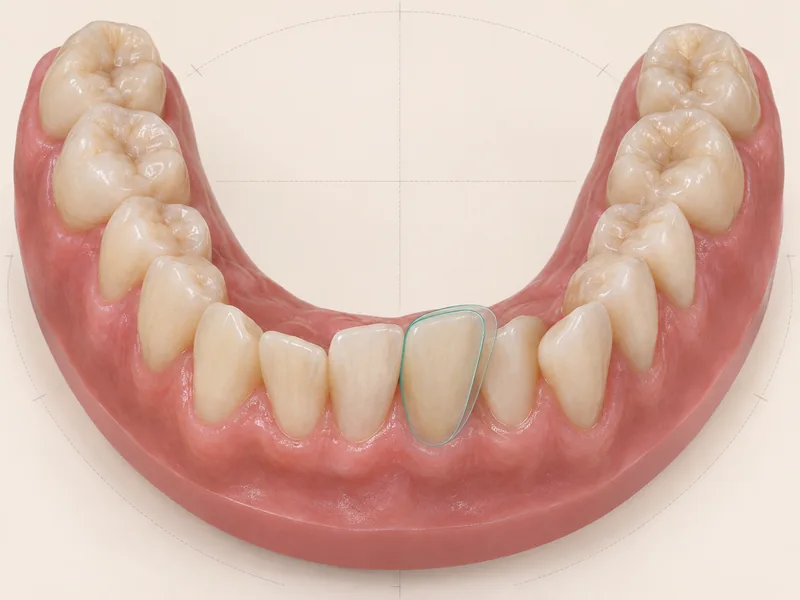
The digital model represents the visible tooth surfaces and recorded bite relationship. It can be created from a scan or digitised models. The model alone does not show every biological requirement for moving teeth.
Software allows individual teeth to be moved virtually. Comparing positions can help explain the intended goal and treatment questions. A movement that looks easy on screen may be clinically demanding.
Progress is checked to see whether planned movements are being achieved. Differences may require changes to the plan. Stabilising the teeth after active correction also needs planning.
Planned tooth positions on a digital model.
Planning and explaining treatment goals.
The simulation does not guarantee an individual result.
Three steps. No audio.
Each scene can also be selected manually.

Silent educational film with German on-screen text and simplified teaching images. Not a patient case or a promised treatment outcome. The full English explanation is available as text.
A set-up shows an intended target on a model. It is not patient before-and-after evidence or a promise to achieve exactly that position or treatment duration.
No. It shows planned positions. Tissue response varies, while the appliance and the patient’s involvement affect progress. The simulation’s limitations should be discussed alongside the intended goal.
No. Virtual set-ups are also used and studied in planning other orthodontic approaches. Having a simulation does not by itself establish which appliance is suitable for you.
This depends on factors including the workflow, type of movement and clinical situation. A 2024 prospective study involving 25 young adults with fixed appliances found meaningful individual differences between planned and achieved positions. It cannot provide a blanket judgement on every program or on aligner treatment.
No. Teeth, gums, bite and relevant history need examination or discussion before a treatment decision. Further records are obtained according to clinical need.
You can bring this question to your appointment:
Which movements does this plan show, what are its limits, and how will actual progress be checked?
If you are considering tooth alignment, a personal consultation can discuss your aims and the assessment steps needed.
Arrange an assessmentAppointment selection at DoctolibA set-up shows an intended target on a model. It is not patient before-and-after evidence or a promise to achieve exactly that position or treatment duration.
Editorial research: . General information, not an individual diagnosis or treatment recommendation. Teaching illustrations are simplified and do not depict a patient case.