What makes it a duplicate?
An existing denture serves as the reference.

A duplicate denture is made using an existing removable denture as its reference. Familiar features such as tooth arrangement and outer contours can be carried over while other details are changed deliberately. Agree in advance whether the duplicate is to be a replacement, a spare or an intermediate aid.
For training & practice ↓
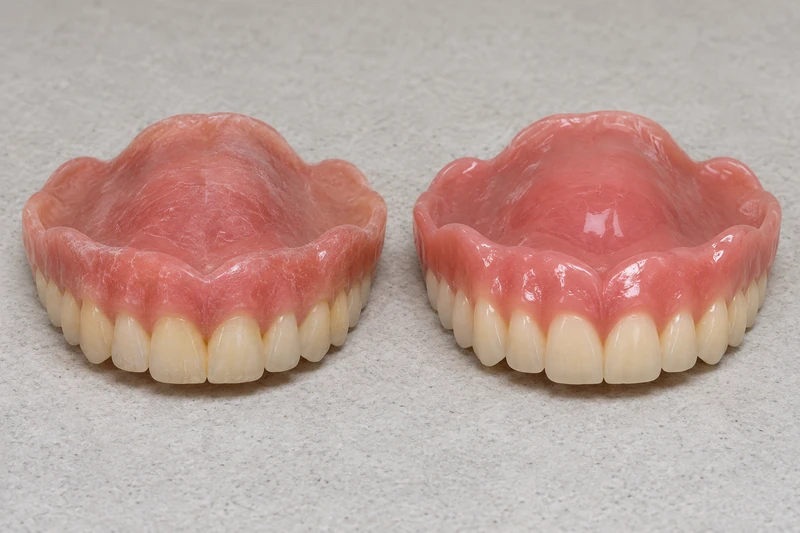
Explain which aspects of speech, chewing or appearance work for you. The existing denture provides a three-dimensional reference for the laboratory.
The ridge may have changed since the first denture was made. Today's tissues need to be assessed when a closer fit is wanted.
The team checks the duplicate in the mouth. A similar appearance on the bench cannot confirm the bite height or rule out a pressure spot.
An existing denture serves as the reference.
For example, shape, tooth arrangement or adaptation to today's tissues.
The reason it is loose needs to be assessed first.
Three steps. No audio.
Each scene can also be selected manually.

Silent film with English on-screen text and simplified teaching images.
Relining changes the fitting surface of an existing denture. Duplication creates a second item using the original as a reference.
Spare describes the intended use. A spare can be made by copying or another method. An older spare may fit poorly even though it still looks familiar.
Production can introduce differences in tooth position or bite height. A laboratory study found variable reproduction of features from a master denture. Checking the result remains important.
Bring the denture you use and any spares. Explain which one works best for eating and speaking, and identify uncomfortable areas.
A question to bring along
Which features of my denture can be kept and which should change?
If a familiar denture needs replacing, bring it along as a reference.
Choose a dental appointmentAppointment selection at DoctolibSuitability as a spare is assessed with the finished denture in the mouth.
Editorial research: . General information, not an individual diagnosis or treatment recommendation. Teaching illustrations are simplified and do not depict a patient case.
If you turn this on, this website stores which guides you open, separately from advertising preferences. The markers expire after a fixed 30-day period from activation. The list is not sent to us by this feature. You can turn it off here and delete the markers.
Other people using the same browser profile can also see the markers. German and English versions share one marker. Expired entries are removed the next time you open a page with this feature; deleting browser data may remove them earlier. “Viewed” means opened, not read or completed.