Always the same amount?
No; progression varies.

When a tooth loses contact with an opposing tooth, it may move beyond its previous chewing level. This overeruption can change the space available for a later restoration. The extent varies between teeth and individuals.
For training & practice ↓
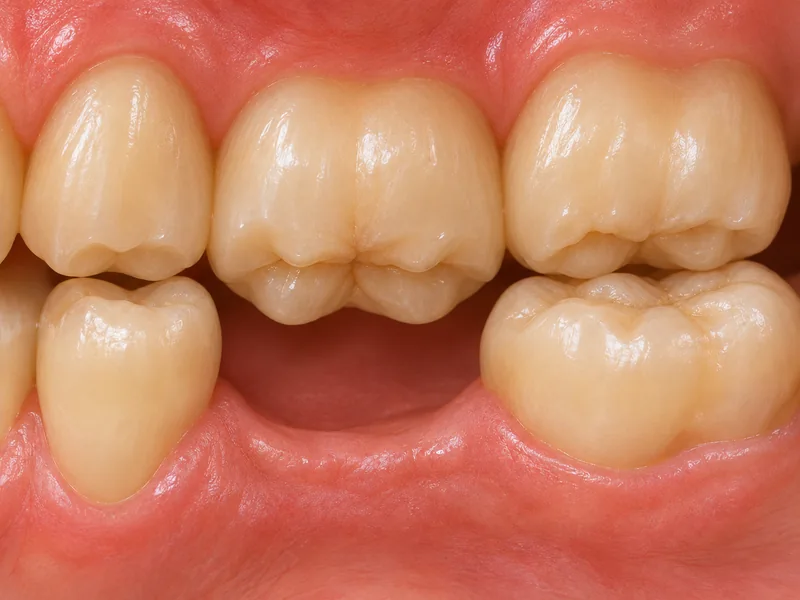
Upper and lower teeth normally meet during biting. Tooth loss can remove this contact.
An unopposed tooth may move further out towards the opposite arch. The amount and direction of change vary.
A tooth extending beyond the previous level can complicate replacement of the opposite missing tooth. Planning considers the bite, tooth condition and space.
No; progression varies.
Loss of contact can contribute.
No; bite relationships need professional planning.
Three steps. No audio.
Each scene can also be selected manually.

Silent educational film with German on-screen text and simplified teaching images. Not a patient case or a promised treatment outcome. The full English explanation is available as text.
Overeruption is a positional movement towards the opposite arch. Recession is movement of the gum margin. A longer-looking tooth does not by itself establish overeruption.
No. The extent of change varies. Whether and how much a tooth has changed position needs individual assessment.
Overeruption changes tooth position. Gum recession exposes more root without necessarily producing the same positional movement. Both findings may coexist.
Not automatically. First, the position of the tooth and its contacts are examined. Further planning takes the findings and preservation of tooth structure into account.
You can bring this question to your appointment:
Has the tooth level changed, and what does that mean for replacing the missing tooth?
An examination can clarify the finding and any need for referral.
Arrange an assessmentAppointment selection at DoctolibOvereruption is a positional movement towards the opposite arch. Recession is movement of the gum margin. A longer-looking tooth does not by itself establish overeruption.
Editorial research: . General information, not an individual diagnosis or treatment recommendation. Teaching illustrations are simplified and do not depict a patient case.