In which direction is it measured?
Across the implant’s long axis.

Implant diameter describes the width of the implant body; meaningful comparisons require a defined measurement location. The ITI consensus uses the greatest external diameter within bone, including the threads. Selection considers available bone, distances to neighbouring structures, the planned restoration and loading. Neither the widest nor the narrowest implant is inherently the best choice.
For training & practice ↓
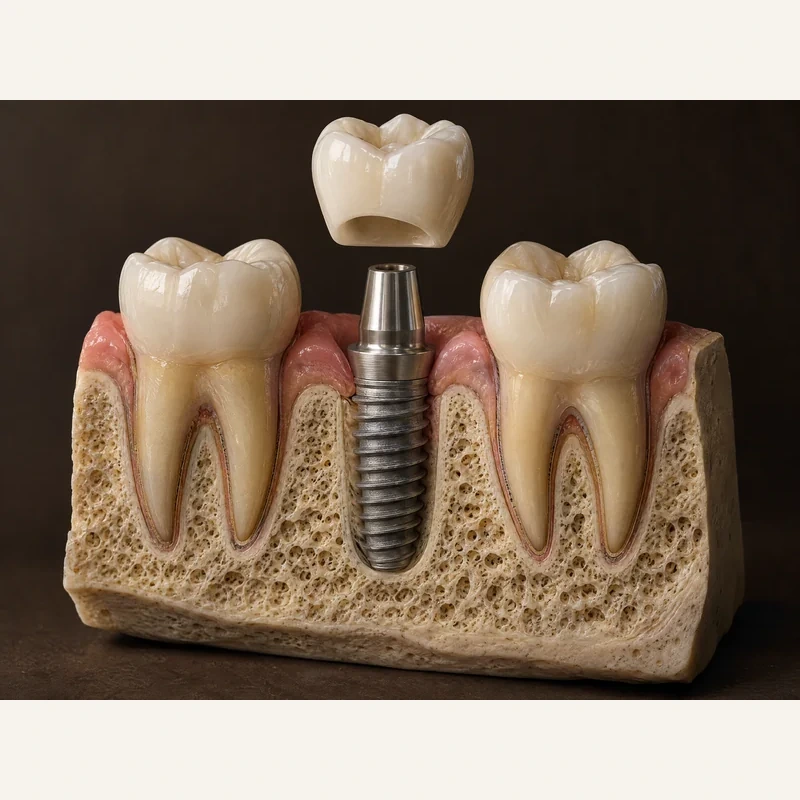
Diameter is measured across the long axis. It differs from implant length and from platform or abutment diameter. Manufacturer details help identify the dimensions correctly.
Bone width and neighbouring structures constrain planning. Narrow implants may be an option in limited spaces, but do not automatically remove the need for bone augmentation.
A smaller diameter may reduce mechanical reserves. Restoration design, chewing forces and material are considered together. One measurement cannot predict implant longevity.
Across the implant’s long axis.
No; design and terminology need consideration.
The treating team using findings and restorative planning.
Three steps. No audio.
Each scene can also be selected manually.

Silent educational film with German on-screen text and simplified teaching images. Not a patient case or a promised treatment outcome. The full English explanation is available as text.
The implant body and its restorative connection may differ in width. The final crown need not have the same width as the implant body either.
Greater width may offer mechanical advantages but requires suitable bone and space. An excessive diameter can disregard anatomical constraints. Overall planning determines suitability.
No. Terminology and cut-offs vary. Narrow two-piece implants should not automatically be equated with very thin, often one-piece mini-implants.
It is often recorded with type and length. If details are missing, ask the documenting practice. The record does not replace a current examination.
You can bring this question to your appointment:
How does the proposed diameter fit the available bone and loading demands of my restoration?
An individual assessment can clarify the findings and whether referral is needed.
Arrange an assessmentAppointment selection at DoctolibThe implant body and its restorative connection may differ in width. The final crown need not have the same width as the implant body either.
Editorial research: . General information, not an individual diagnosis or treatment recommendation. Teaching illustrations are simplified and do not depict a patient case.
If you turn this on, this website stores which guides you open, separately from advertising preferences. The markers expire after a fixed 30-day period from activation. The list is not sent to us by this feature. You can turn it off here and delete the markers.
Other people using the same browser profile can also see the markers. German and English versions share one marker. Expired entries are removed the next time you open a page with this feature; deleting browser data may remove them earlier. “Viewed” means opened, not read or completed.