What does the term describe?
The implant’s outer texture and chemistry.

The implant surface is the outer contact zone between a dental implant and surrounding tissues. Alongside the base material, microstructure and surface chemistry influence wetting and tissue responses. These properties are deliberately modified and studied. A description such as rough or hydrophilic alone, however, proves neither better long-term outcomes nor protection against peri-implantitis.
For training & practice ↓
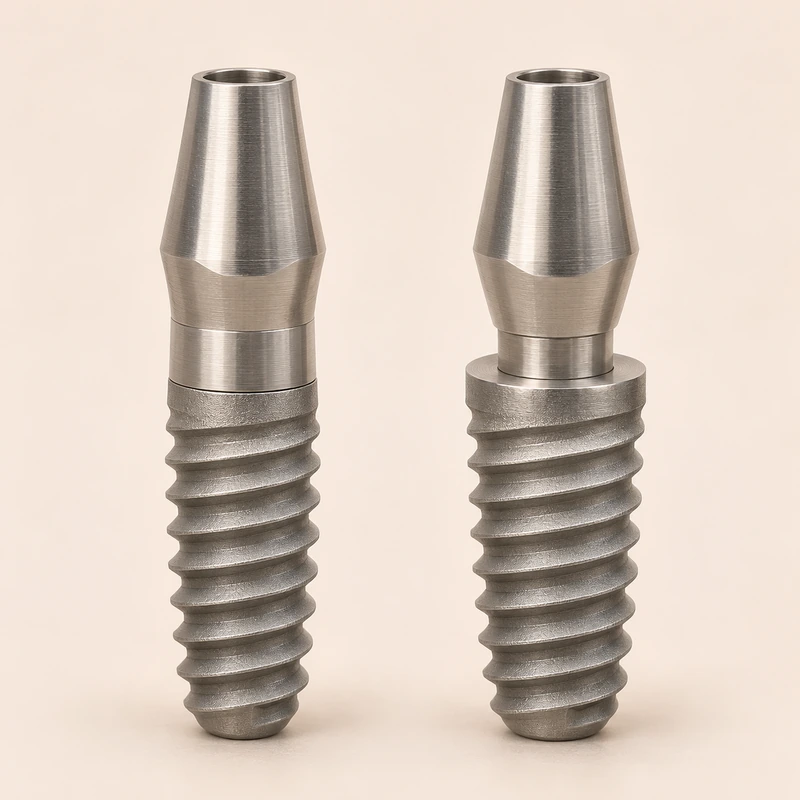
Threads and diameter describe the implant’s larger-scale shape. Its surface also has finer structures and chemical properties that cannot be judged reliably with the naked eye.
Wettability and texture can influence early bone contact. Laboratory findings or short healing studies cannot be translated directly into a promise of lifelong durability.
A special surface does not reliably prevent biofilm. Accessible restorations, suitable cleaning and reviews remain part of implant care. A surface property cannot replace them.
The implant’s outer texture and chemistry.
Tissue response and early integration.
Suitable planning, cleaning and maintenance.
Three steps. No audio.
Each scene can also be selected manually.

Silent educational film with German on-screen text and simplified teaching images. Not a patient case or a promised treatment outcome. The full English explanation is available as text.
Titanium or ceramic identifies the base material. Texture and wettability describe the outer zone; threads and diameter concern shape. These aspects should be compared separately.
Readily wettable by water. It describes a surface property, not a general guarantee of healing or durability.
There is no such simple ranking. The bone-contacting zone has different demands from exposed components. Clinical outcomes also depend on many other factors.
No. Diagnosis relies on inflammatory findings and the supporting bone over time. A product label or visible roughness is insufficient.
You can bring this question to your appointment:
What clinical evidence supports this implant system, and how will my risks and future cleaning access be considered?
An individual assessment can clarify the findings and whether referral is needed.
Arrange an assessmentAppointment selection at DoctolibTitanium or ceramic identifies the base material. Texture and wettability describe the outer zone; threads and diameter concern shape. These aspects should be compared separately.
Editorial research: . General information, not an individual diagnosis or treatment recommendation. Teaching illustrations are simplified and do not depict a patient case.
If you turn this on, this website stores which guides you open, separately from advertising preferences. The markers expire after a fixed 30-day period from activation. The list is not sent to us by this feature. You can turn it off here and delete the markers.
Other people using the same browser profile can also see the markers. German and English versions share one marker. Expired entries are removed the next time you open a page with this feature; deleting browser data may remove them earlier. “Viewed” means opened, not read or completed.