Can it be digital?
Yes; model-based workflows also exist.

With indirect bonding, bracket positions are planned on a model or digitally first. A transfer tray then places the brackets at the intended sites on the teeth. Their position and attachment still require clinical checks.
For training & practice ↓
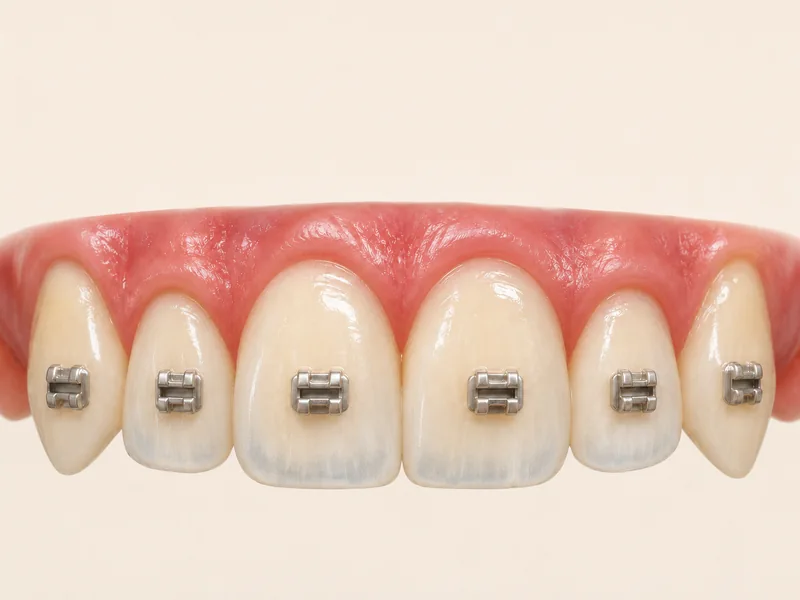
Positions are selected on a model or digital view, taking tooth shape and the treatment plan into account.
A prepared transfer tray holds the brackets during placement. Adhesive connects them to the prepared tooth surfaces.
The transfer tray is removed and the brackets are checked. Planning and transfer do not replace continuing treatment reviews.
Yes; model-based workflows also exist.
The transfer tray does not remain as an aligner.
Yes; placement and treatment are checked.
Three steps. No audio.
Each scene can also be selected manually.

Silent educational film with German on-screen text and simplified teaching images. Not a patient case or a promised treatment outcome. The full English explanation is available as text.
A transfer tray positions brackets during bonding and is then removed. An aligner is worn as a removable treatment appliance. They serve different purposes.
In direct bonding, each bracket is positioned on the tooth itself. Indirect bonding uses prior positioning on a model or digitally, followed by transfer.
Whether placement is more accurate depends on the workflow and how it is carried out. Planned bracket positions still need to be checked after transfer.
Yes. Cleaning, loading and reviews remain important. Report a loose bracket to the treating team.
You can bring this question to your appointment:
How are bracket positions planned and checked after transfer?
An examination can clarify the finding and any need for referral.
Arrange an assessmentAppointment selection at DoctolibA transfer tray positions brackets during bonding and is then removed. An aligner is worn as a removable treatment appliance. They serve different purposes.
Editorial research: . General information, not an individual diagnosis or treatment recommendation. Teaching illustrations are simplified and do not depict a patient case.