What is the main aim?
A more favourable inclination of the tooth's long axis.

Orthodontic uprighting changes the inclination of a molar. A typical example is a back tooth whose crown has tipped into an adjacent gap. The aim may be a more favourable angle for biting, cleaning the area or restoring the space later.
For training & practice ↓
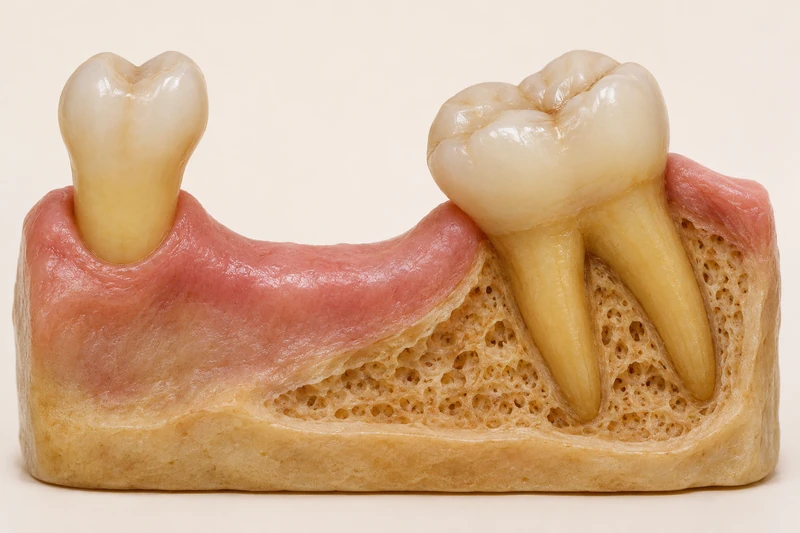
A crown can narrow a gap from above. Planning includes root and neighbour positions and the way the opposing tooth contacts the area.
An orthodontic appliance applies a controlled turning effect. Depending on the starting position, tooth height and room for the crown must also be managed.
Other teeth or a temporary anchorage device can provide support. The team monitors tooth position and coordinates the final arrangement with any planned replacement.
A more favourable inclination of the tooth's long axis.
The condition of the supporting tissues affects planning and follow-up.
Other teeth or additional anchorage, depending on the mechanics.
Three steps. No audio.
Each scene can also be selected manually.

Silent film with English on-screen text and simplified teaching images.
Some unerupted teeth may be considered for surgical repositioning. Orthodontic uprighting changes inclination over time.
Uprighting mainly changes the angle. As the crown moves out of the gap it may actually create space for a planned replacement. Moving the whole tooth to close the space is a different objective.
A small follow-up study found shallower pockets on the front surface of uprighted molars than at control teeth. It did not find a clear difference in bone height change. Gum inflammation needs its own assessment.
A permanent tooth-replacement implant is not required for uprighting itself. A temporary orthodontic miniscrew is one of several anchorage options.
A question to bring along
Are we changing only the tooth angle or also the size of the gap?
A tipped tooth calls for coordinated assessment of alignment, bite and any planned restoration.
Choose a dental appointmentAppointment selection at DoctolibThe space between crowns and the space between roots can differ.
Editorial research: . General information, not an individual diagnosis or treatment recommendation. Teaching illustrations are simplified and do not depict a patient case.
If you turn this on, this website stores which guides you open, separately from advertising preferences. The markers expire after a fixed 30-day period from activation. The list is not sent to us by this feature. You can turn it off here and delete the markers.
Other people using the same browser profile can also see the markers. German and English versions share one marker. Expired entries are removed the next time you open a page with this feature; deleting browser data may remove them earlier. “Viewed” means opened, not read or completed.