Which tissue is largely left in place?
The soft tissue over the jawbone.

In flapless implant placement, the implant is inserted through a limited opening in the mucosa. A wider flap of gum is not lifted away from the bone. This approach requires suitable anatomy and careful planning.
For training & practice ↓
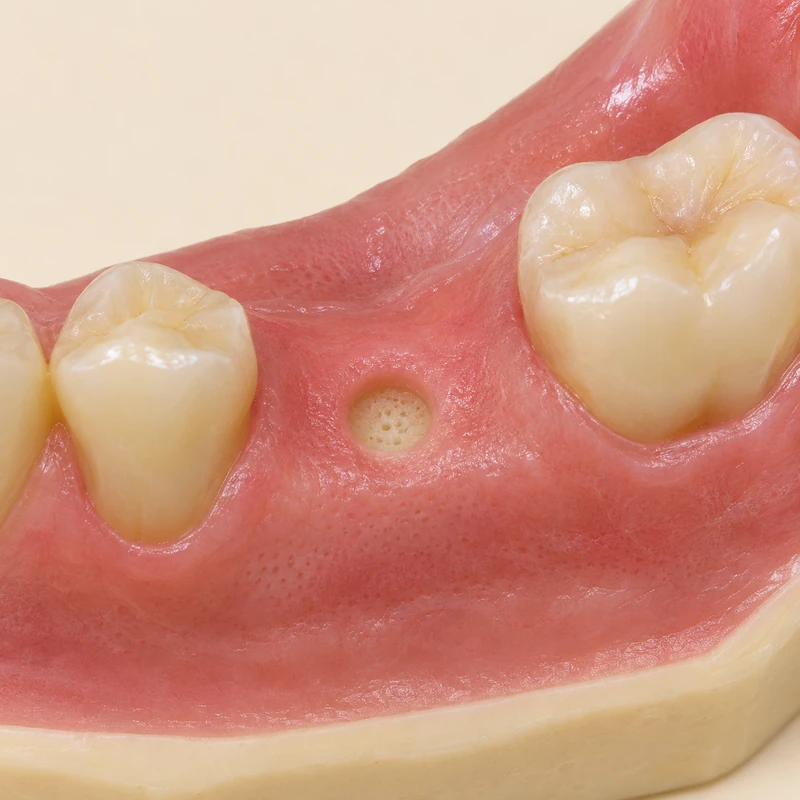
The model shows a small opening in a healed ridge. The surrounding soft tissue remains in place.
Direct sight of the bone is limited with this approach. Its three-dimensional shape and neighbouring structures need to be assessed beforehand.
A guide can transfer a planned position. The term flapless describes how the clinician gains access through soft tissue.
The soft tissue over the jawbone.
Anatomy, clinical findings and the visibility needed.
Whether a specific guidance technique is used.
Three steps. No audio.
Each scene can also be selected manually.

Silent film with English on-screen text and simplified teaching images.
Later uncovering exposes an implant that healed beneath soft tissue. Flapless placement refers to the initial insertion.
No. The dentist makes a small opening in the gum and prepares the implant bed in the bone, usually with drills. This is surgery and the wound needs to heal.
A randomised comparison found some patient-reported comfort advantages in selected cases but no significant difference in crestal bone loss in that study. Depending on the site, limited visibility may weigh against this approach.
No. A guide is a tool for transferring the plan. Flapless describes only how access to the bone is obtained.
A question to bring along
Why is a particular approach appropriate for my jaw?
If an implant is planned, you can discuss possible approaches and the reason for the recommendation.
Choose an appointmentAppointment selection at DoctolibThe size of the access and the need for three-dimensional planning are separate considerations.
Editorial research: . General information, not an individual diagnosis or treatment recommendation. Teaching illustrations are simplified and do not depict a patient case.
If you turn this on, this website stores which guides you open, separately from advertising preferences. The markers expire after a fixed 30-day period from activation. The list is not sent to us by this feature. You can turn it off here and delete the markers.
Other people using the same browser profile can also see the markers. German and English versions share one marker. Expired entries are removed the next time you open a page with this feature; deleting browser data may remove them earlier. “Viewed” means opened, not read or completed.