Fibres at the tip
The frayed tip forms many short fibres that can sweep plaque from accessible surfaces.

A miswak, also called a siwak, is a traditional tooth-cleaning stick, often made from the arak tree (Salvadora persica). One end is softened and frayed to expose fibres that can sweep plaque from the tooth surfaces they reach.
For training & practice ↓
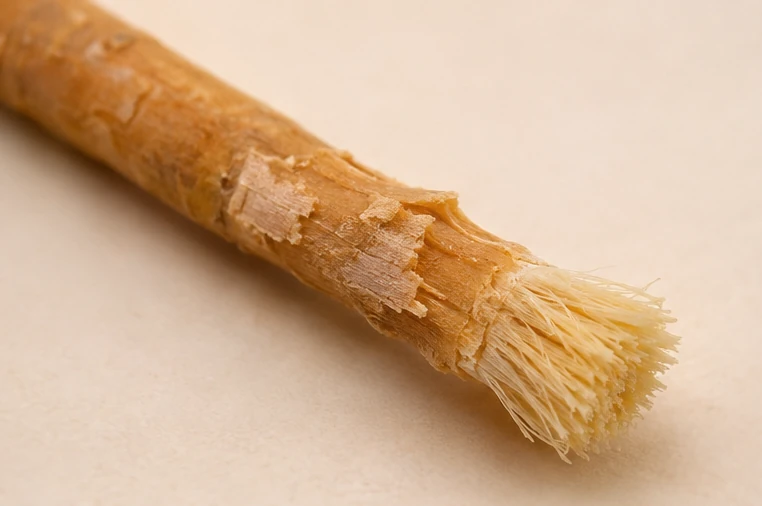
The frayed tip forms many short fibres that can sweep plaque from accessible surfaces.
A manual brush used with fluoride toothpaste combines brushing with fluoride delivery.
The spaces between teeth need separate cleaning with a suitable aid.
The frayed tip forms many short fibres that can sweep plaque from accessible surfaces.
A manual brush used with fluoride toothpaste combines brushing with fluoride delivery.
The spaces between teeth need separate cleaning with a suitable aid.
The frayed tip forms many short fibres that can sweep plaque from accessible surfaces.
A manual brush used with fluoride toothpaste combines brushing with fluoride delivery.
The spaces between teeth need separate cleaning with a suitable aid.
Three steps. No audio.
Each scene can also be selected manually.

Silent film with English on-screen text and simplified teaching images.
Dental guidance recommends brushing twice a day with fluoride toothpaste. An untreated stick does not deliver the declared fluoride concentration of a fluoride toothpaste. If you like using a miswak, you can use it alongside brushing. The spaces between your teeth still need separate cleaning.
Dental guidance recommends brushing twice a day with fluoride toothpaste. An untreated stick does not deliver the declared fluoride concentration of a fluoride toothpaste. If you like using a miswak, you can use it alongside brushing. The spaces between your teeth still need separate cleaning.
Avoid repeatedly rubbing a sore area. If the gum bleeds repeatedly, ask a dental professional to check for inflammation and show you a gentle way to clean the area. The bleeding alone cannot identify what caused it.
A two-week trial in 60 young women compared miswak with a toothbrush. Plaque scores in the miswak group showed no clear improvement over the study period and gum inflammation scores rose. The trial did not measure whether participants developed cavities over the following years.
A question to ask
How can I use miswak while looking after fluoride exposure and the spaces between my teeth?
Choose an appointment to discuss your own tooth or restoration.
Choose an appointmentAppointment selection at DoctolibPlaque scores, gum inflammation and the number of new cavities are different outcomes. This distinction matters when evaluating a mechanical cleaning aid and its possible role in decay prevention.
Editorial research: . General information, not an individual diagnosis or treatment recommendation. Teaching illustrations are simplified and do not depict a patient case.
If you turn this on, this website stores which guides you open, separately from advertising preferences. The markers expire after a fixed 30-day period from activation. The list is not sent to us by this feature. You can turn it off here and delete the markers.
Other people using the same browser profile can also see the markers. German and English versions share one marker. Expired entries are removed the next time you open a page with this feature; deleting browser data may remove them earlier. “Viewed” means opened, not read or completed.