Who may find it relevant?
People who struggle with particular areas or tools; suitability can be discussed individually.

A water flosser directs a stream of water around teeth and into interdental spaces. It can supplement daily oral care, for example where some areas are difficult to reach. It does not replace brushing; the right interdental tool depends on the conditions in the mouth.
For training & practice ↓
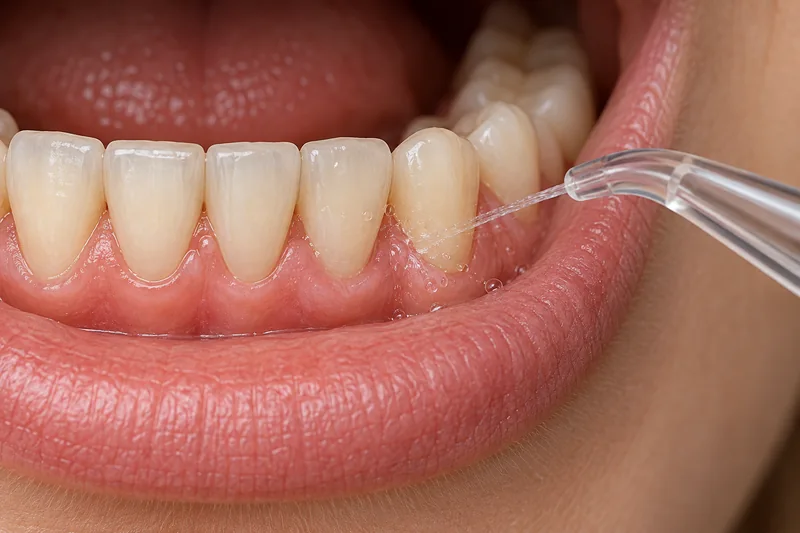
The directed stream supports cleaning between and around teeth. Whether it meaningfully reaches a particular area also depends on the shape of the space and existing restorations.
Tight contacts, open spaces, brackets and a bridge present different demands. Floss, appropriately sized brushes and water flossers do not automatically perform the same task.
Daily brushing with fluoride toothpaste remains important. Recurrent bleeding, pain or swelling needs examination; increasing water pressure is not a dependable answer.
People who struggle with particular areas or tools; suitability can be discussed individually.
Suitable use, access and care around existing brackets or restorations.
Fluoride toothpaste, daily cleaning and assessment of concerning symptoms.
Three steps. No audio.
Each scene can also be selected manually.

Silent educational film with German on-screen text and simplified teaching images. Not a patient case or a promised treatment outcome. The full English explanation is available below.
The directed stream supports cleaning between and around teeth. Whether it meaningfully reaches a particular area also depends on the shape of the space and existing restorations.
Tight contacts, open spaces, brackets and a bridge present different demands. Floss, appropriately sized brushes and water flossers do not automatically perform the same task.
Daily brushing with fluoride toothpaste remains important. Recurrent bleeding, pain or swelling needs examination; increasing water pressure is not a dependable answer.
A water flosser is a device supporting mechanical cleaning. Mouthwash is a liquid with properties that depend on the product. They are different and neither replaces toothbrushing.
It does not reliably remove hardened deposits. Tartar is removed professionally with appropriate instruments.
There is no single best option for everyone. A tool must reach the area and be practical to use. Appropriately sized interdental brushes are often considered for open spaces.
Application should suit the device and the mouth. Product instructions and personal guidance help. If discomfort occurs, do not keep increasing pressure; have the cause checked.
An editorially suggested question for a discussion with Dr med dent Niusha Barahmand Pour:
Which areas am I not reaching well, and which tool fits my teeth there?
If interdental cleaning is difficult, a practical approach can be discussed together.
Discuss suitable oral careAppointment selection at DoctolibA water flosser is a device supporting mechanical cleaning. Mouthwash is a liquid with properties that depend on the product. They are different and neither replaces toothbrushing.
Editorial research: . General information, not an individual diagnosis or treatment recommendation. Teaching illustrations are simplified and do not depict a patient case.