Tissue or space?
An anatomical space.

The oral vestibule is the space between the lips or cheeks and the dental arches with their gums. It lies outside the arches but inside the mouth. Its lining turns from the lip or cheek towards the jaw at the mucobuccal fold. The vestibule is an anatomical space, not a periodontal pocket or a disease.
For training & practice ↓
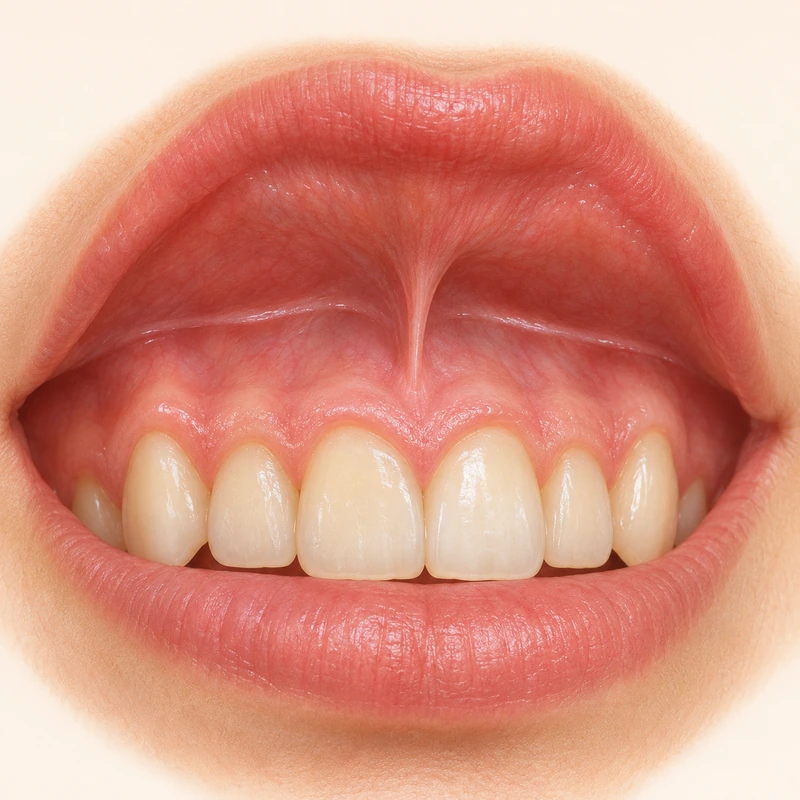
The oral vestibule lies between the lips or cheeks and the outer tooth surfaces. The space within the dental arches is the oral cavity proper.
The lining turns from the mobile lip or cheek towards the jaw. This reflection forms a fold; small frena divide parts of the vestibule.
A change in the vestibule has initially only been located. Examination is needed to determine whether it is irritation, inflammation or another condition.
An anatomical space.
The lip and cheek side.
No; these are different spaces.
Three steps. No audio.
Each scene can also be selected manually.

Silent educational film with German on-screen text and simplified teaching images. Not a patient case or a promised treatment outcome. The full English explanation is available as text.
The vestibule is a space. Oral mucosa is the tissue lining its walls and other parts of the mouth.
No. It is inside the mouth, on the lip and cheek side of the dental arches.
No. A periodontal pocket concerns the narrow space between a tooth and its gum. The vestibule is the much larger space outside the arches.
It means facing or relating to the oral vestibule. Depending on the tooth, this can refer to the lip-facing or cheek-facing side.
This exposes the lining and its fold for inspection. A normal-looking tooth does not establish that every neighbouring soft-tissue area is normal.
A new lump, persistent red or white patch, or ulcer lasting more than three weeks should be assessed by a dentist or doctor. These findings do not automatically mean cancer.
You can bring this question to your appointment:
Which exact part of the vestibule is involved, and what was found there?
A dental examination can clarify how this relates to your findings and treatment planning.
Discuss your dental findingsAppointment selection at DoctolibThe vestibule is a space. Oral mucosa is the tissue lining its walls and other parts of the mouth.
Editorial research: . General information, not an individual diagnosis or treatment recommendation. Teaching illustrations are simplified and do not depict a patient case.
If you turn this on, this website stores which guides you open, separately from advertising preferences. The markers expire after a fixed 30-day period from activation. The list is not sent to us by this feature. You can turn it off here and delete the markers.
Other people using the same browser profile can also see the markers. German and English versions share one marker. Expired entries are removed the next time you open a page with this feature; deleting browser data may remove them earlier. “Viewed” means opened, not read or completed.