Is NiTi nickel-free?
No. Nickel is a major constituent. NiTi is not the same as titanium or another titanium alloy.

Nickel-titanium, or NiTi, is an alloy of nickel and titanium. Certain forms exhibit distinctive shape recovery through changes in crystal structure. Dental applications include orthodontic wires and root canal instruments.
For training & practice ↓
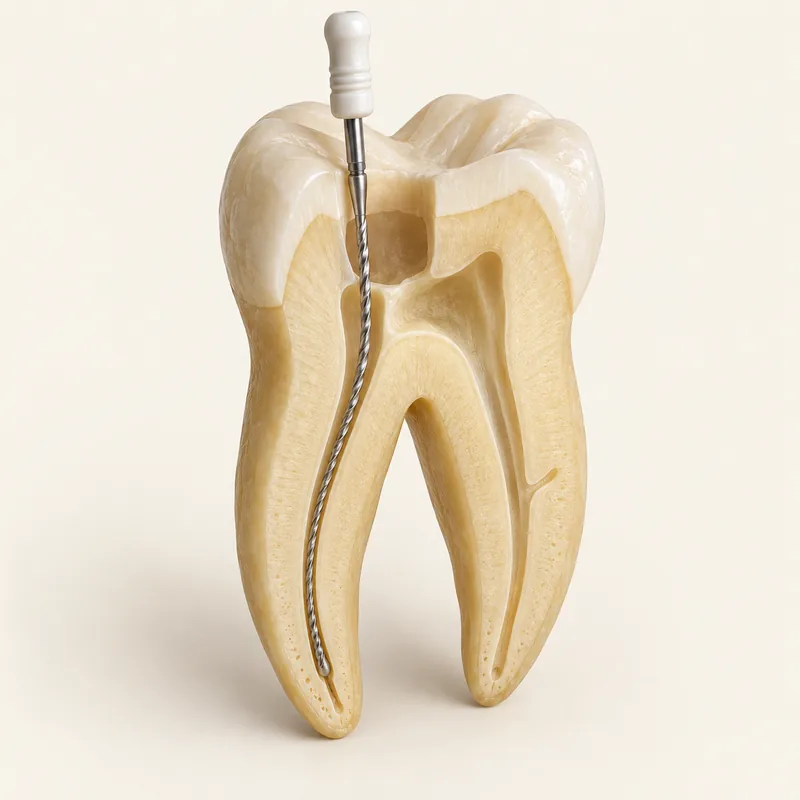
Certain NiTi products recover after deformation within their intended range. Temperature and processing influence this behaviour.
Wires support planned tooth movement; files prepare root canals. Sharing a base material does not mean sharing an instrument function.
NiTi can still fatigue or fracture. Product instructions and professional use matter; nickel allergy belongs in the medical history.
No. Nickel is a major constituent. NiTi is not the same as titanium or another titanium alloy.
Certain forms exhibit substantial reversible deformation within their intended range. This does not promise unlimited flexibility.
No. Geometry, heat treatment and temperature influence mechanical behaviour; the particular product matters.
Three steps. No audio.
Each scene can also be selected manually.

Silent educational film with German on-screen text and simplified teaching images. Not a patient case or a promised treatment outcome. The full English explanation is available as text.
NiTi contains nickel. The word titanium in its name does not imply absence of nickel.
No. Nickel is a major constituent. NiTi is not the same as titanium or another titanium alloy.
Certain forms exhibit substantial reversible deformation within their intended range. This does not promise unlimited flexibility.
No. Geometry, heat treatment and temperature influence mechanical behaviour; the particular product matters.
Yes. Repeated bending and torsional loading can reach the instrument's limits. The material does not eliminate fracture.
Discuss it before treatment and bring existing findings. The material and possible alternatives require individual assessment; skin and oral reactions are not identical.
You can raise this editorially suggested question during your consultation.
Which material properties and known allergies are relevant to my treatment plan?
Which material properties and known allergies are relevant to my treatment plan?
Request a consultationAppointment selection at DoctolibMaterial properties, instrument design and clinical treatment success require separate assessment.
Editorial research: . General information, not an individual diagnosis or treatment recommendation. Teaching illustrations are simplified and do not depict a patient case.
If you turn this on, this website stores which guides you open, separately from advertising preferences. The markers expire after a fixed 30-day period from activation. The list is not sent to us by this feature. You can turn it off here and delete the markers.
Other people using the same browser profile can also see the markers. German and English versions share one marker. Expired entries are removed the next time you open a page with this feature; deleting browser data may remove them earlier. “Viewed” means opened, not read or completed.