What is compared?
Baseline records and current findings around the treated teeth.

At periodontal re-evaluation the team records findings around the teeth after a phase of treatment and compares them with the baseline. Measurements include pocket depths and bleeding on probing. The comparison helps identify sites needing further treatment and guides supportive care.
For training & practice ↓
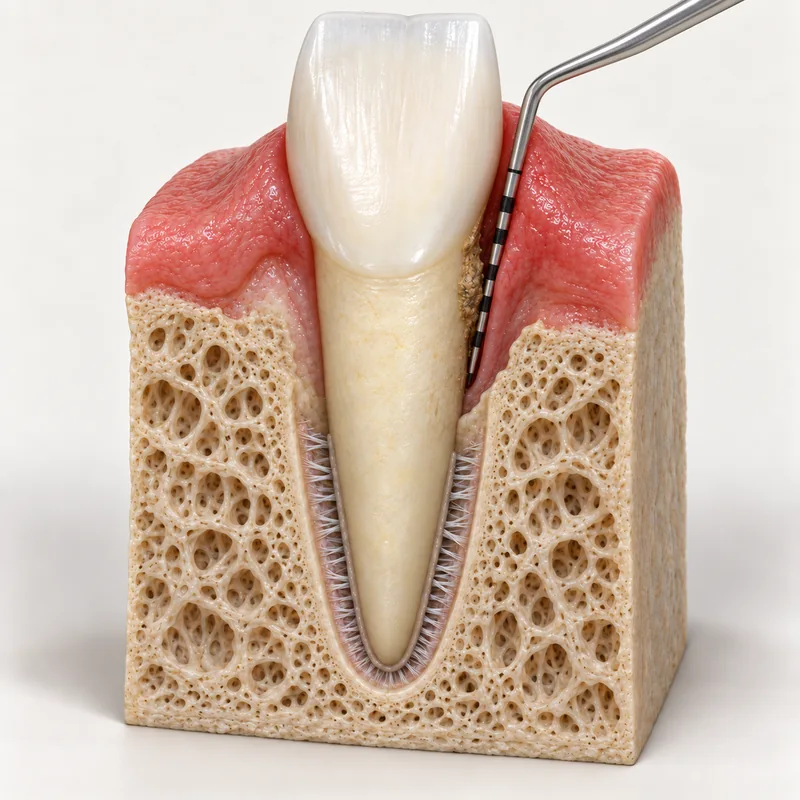
A periodontal probe measures pockets at recorded sites. The new values can then be compared with the earlier findings.
Bleeding after gentle probing adds information to the depth reading. Mobility and involvement of root divisions on multi-rooted teeth are also assessed.
Depending on changes, a site may need repeat treatment or discussion of further therapy. Supportive periodontal care continues to monitor the condition achieved.
Baseline records and current findings around the treated teeth.
They describe different features of the examined site.
Identify areas that hurt during cleaning or are difficult to reach.
Three steps. No audio.
Each scene can also be selected manually.

Silent film with English on-screen text and simplified teaching images.
Screening looks for signs that further assessment is needed. Re-evaluation compares documented findings after treatment with earlier measurements.
Under Germany's statutory periodontal treatment pathway, the first re-evaluation is scheduled three to six months after completion of anti-infective therapy. Report acute symptoms sooner.
Yes. Visible improvement is encouraging, but deeper or persistently inflamed sites can go unnoticed. Probing reaches areas you cannot inspect at home.
Decisions consider repeat findings, inflammation, root access, risk factors and your preferences. The team explains options for the site concerned.
A question to bring along
Which sites have improved and where do you recommend further treatment?
At your review, ask to see how the new measurements compare with your baseline.
Choose a dental appointmentAppointment selection at DoctolibLess bleeding when brushing and stable pocket measurements are different observations.
Editorial research: . General information, not an individual diagnosis or treatment recommendation. Teaching illustrations are simplified and do not depict a patient case.
If you turn this on, this website stores which guides you open, separately from advertising preferences. The markers expire after a fixed 30-day period from activation. The list is not sent to us by this feature. You can turn it off here and delete the markers.
Other people using the same browser profile can also see the markers. German and English versions share one marker. Expired entries are removed the next time you open a page with this feature; deleting browser data may remove them earlier. “Viewed” means opened, not read or completed.