Which jaw?
Conventionally the upper jaw.

A pendulum appliance is a fixed orthodontic device used to move upper molars backwards. Spring arms act on the molars from palatal anchorage. In suitable cases this can create space or improve the bite relationship. Supporting teeth can move too, so tipping and changes in the vertical bite relationship need monitoring.
For training & practice ↓
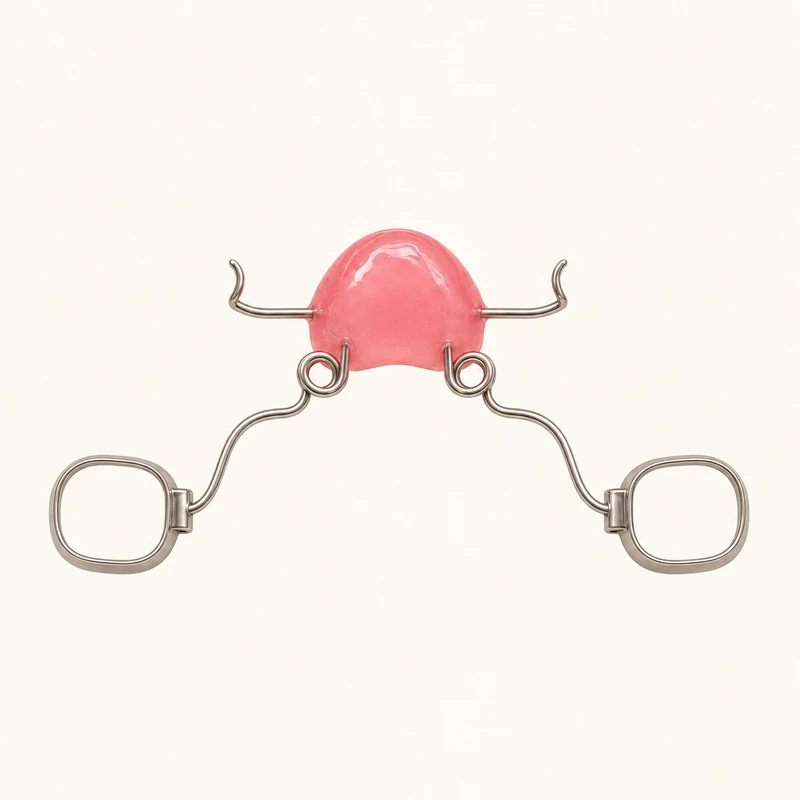
A palatal base and anchorage support spring arms to the upper molars. The appliance targets these teeth; it does not automatically widen the entire upper jaw.
As molars move backwards, other teeth may move forwards. Such anchorage loss and tooth tipping are assessed throughout treatment.
Stabilisation and further tooth movement often follow distalisation. Bite height, available space and the intended final position determine whether the approach is suitable.
Conventionally the upper jaw.
Moving upper molars backwards.
Yes, including tipping and anchorage loss.
Three steps. No audio.
Each scene can also be selected manually.

Silent educational film with German on-screen text and simplified teaching images. Not a patient case or a promised treatment outcome. The full English explanation is available as text.
The pendulum mainly moves teeth within the upper jaw. It does not reliably make a short lower jaw grow to a predetermined length.
A conventional pendulum appliance is fixed. The treating team fits, reviews and removes it; do not adjust the springs yourself.
No. Available space, tooth positions and the underlying jaw relationship limit what is possible. Extraction decisions require a complete treatment plan.
No. Both may use an acrylic palatal support. A pendulum appliance has active springs for moving molars; a conventional Nance appliance mainly provides holding and anchorage.
You can bring this question to your appointment:
How much space is intended, and how will anchorage and the vertical bite relationship be monitored?
An individual assessment can clarify the findings and whether referral is needed.
Arrange an assessmentAppointment selection at DoctolibThe pendulum mainly moves teeth within the upper jaw. It does not reliably make a short lower jaw grow to a predetermined length.
Editorial research: . General information, not an individual diagnosis or treatment recommendation. Teaching illustrations are simplified and do not depict a patient case.
If you turn this on, this website stores which guides you open, separately from advertising preferences. The markers expire after a fixed 30-day period from activation. The list is not sent to us by this feature. You can turn it off here and delete the markers.
Other people using the same browser profile can also see the markers. German and English versions share one marker. Expired entries are removed the next time you open a page with this feature; deleting browser data may remove them earlier. “Viewed” means opened, not read or completed.