Which part is narrower?
The abutment where it connects to the platform.

Platform switching is a design in which the abutment is narrower at the connection than the implant platform. This moves the implant–abutment junction inward. Suitable implant systems use this concept to support favourable tissue conditions around the implant neck. It does not prevent every instance of bone loss or peri-implantitis.
For training & practice ↓
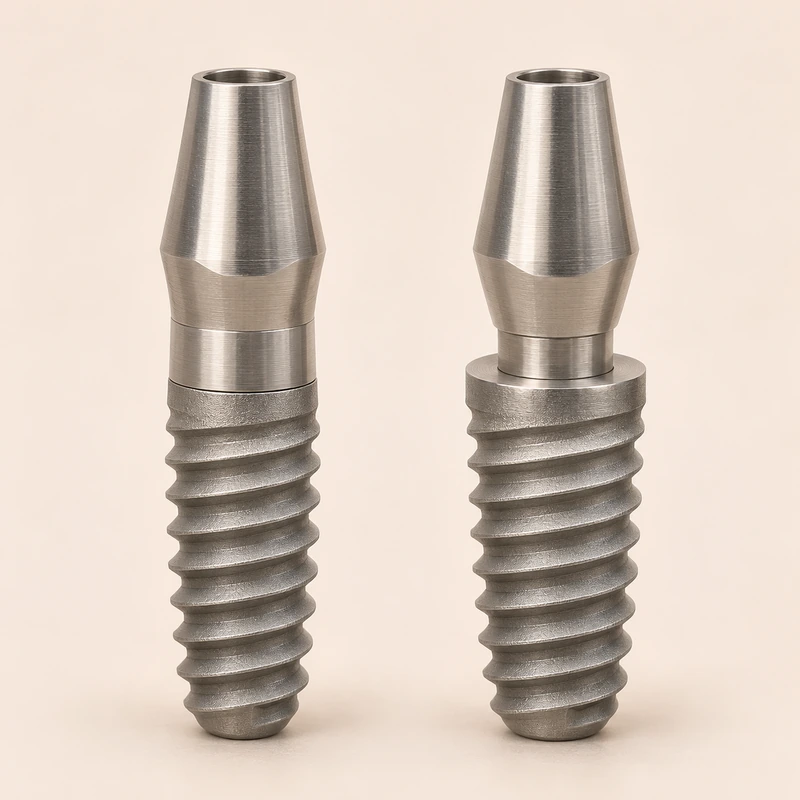
In cross-section, the abutment is narrower than the implant platform at the connection. The horizontal offset is intentional; it does not mean that an arbitrary component can be fitted.
Platform size, abutment height, soft tissue and restoration position interact. Platform switching is one design feature within the overall treatment plan.
These implants still need appropriate cleaning and check-ups. Bleeding, swelling or changes require assessment; a connection design cannot replace preventive care.
The abutment where it connects to the platform.
No; system compatibility matters.
No; cleaning and maintenance remain essential.
Three steps. No audio.
Each scene can also be selected manually.

Silent educational film with German on-screen text and simplified teaching images. Not a patient case or a promised treatment outcome. The full English explanation is available as text.
Implant diameter describes the width of the implant body. Platform switching describes its offset from the abutment width at the connection. These measurements are not equivalent.
No. It describes the size relationship between the implant platform and abutment. Material and internal connection shape are separate characteristics.
Only if compatible parts are intended for that system and clinical conditions are suitable. Arbitrary substitution can compromise fit and stability.
No. Bone and tissue changes depend on several factors. The design is not a guarantee; comparison findings and follow-up still matter.
You can bring this question to your appointment:
Which connection design does my implant use, and what does it mean for the restoration and cleaning?
An individual assessment can clarify the findings and whether referral is needed.
Arrange an assessmentAppointment selection at DoctolibImplant diameter describes the width of the implant body. Platform switching describes its offset from the abutment width at the connection. These measurements are not equivalent.
Editorial research: . General information, not an individual diagnosis or treatment recommendation. Teaching illustrations are simplified and do not depict a patient case.
If you turn this on, this website stores which guides you open, separately from advertising preferences. The markers expire after a fixed 30-day period from activation. The list is not sent to us by this feature. You can turn it off here and delete the markers.
Other people using the same browser profile can also see the markers. German and English versions share one marker. Expired entries are removed the next time you open a page with this feature; deleting browser data may remove them earlier. “Viewed” means opened, not read or completed.