What defines the two-stage approach?
Re-entry is planned from the outset.

Stepwise caries removal deliberately leaves some affected dentine close to a living pulp at the first visit. The tooth is sealed. At a planned second opening the dentist reassesses the remaining tissue and completes the restoration.
For training & practice ↓
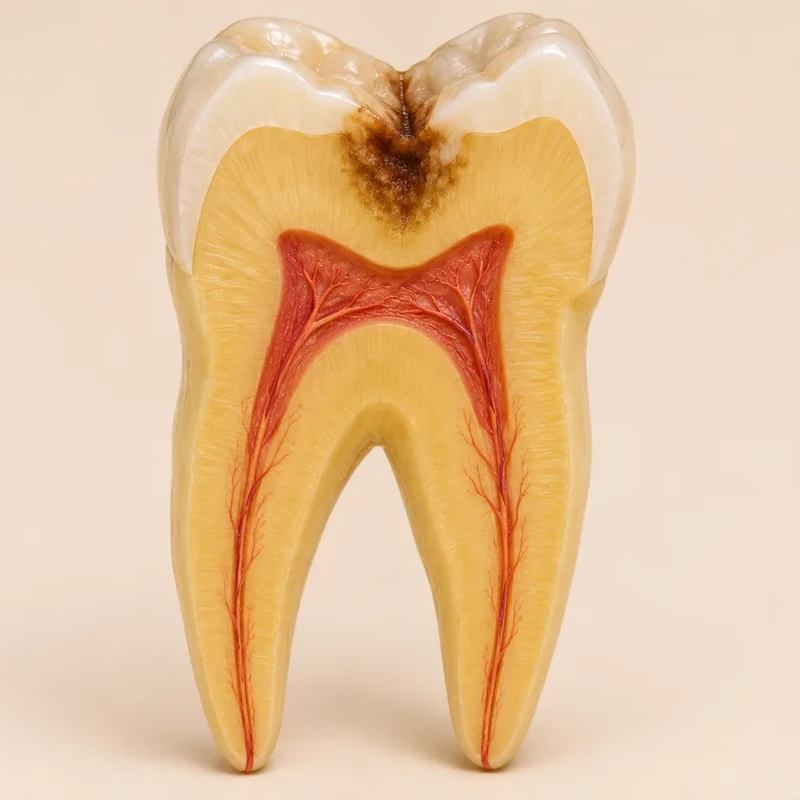
In section, the defect extends from the chewing surface into dentine. Further excavation could expose the pulp.
The edges need to support a reliable seal. Affected dentine can initially remain near the pulp.
The initial seal is reopened after an agreed interval. The remaining dentine is assessed before definitive restoration.
Re-entry is planned from the outset.
Contact the practice before the planned follow-up.
Further excavation may expose the pulp.
Three steps. No audio.
Each scene can also be selected manually.

Silent film with English on-screen text and simplified teaching images.
One-stage selective removal does not plan a later re-entry for further excavation.
No. One-stage selective removal leaves dentine near the pulp and places a definitive seal. Findings guide the choice of approach.
A two-stage plan includes assessment of the interim seal. Contact the practice sooner if it comes out.
Re-entry can itself expose the pulp. Studies have also preserved vitality in selected teeth with a one-visit selective approach.
A question to bring along
Is the seal definitive or is re-entry planned for my tooth?
For deep decay, discuss the findings, timing and purpose of a further visit.
Choose an appointmentAppointment selection at DoctolibTrials included selected deeply carious teeth with assessed pulp responses. Their findings do not apply to every painful tooth.
Editorial research: . General information, not an individual diagnosis or treatment recommendation. Teaching illustrations are simplified and do not depict a patient case.
If you turn this on, this website stores which guides you open, separately from advertising preferences. The markers expire after a fixed 30-day period from activation. The list is not sent to us by this feature. You can turn it off here and delete the markers.
Other people using the same browser profile can also see the markers. German and English versions share one marker. Expired entries are removed the next time you open a page with this feature; deleting browser data may remove them earlier. “Viewed” means opened, not read or completed.