Which surface is treated?
Freshly prepared dentine.

In immediate dentine sealing, the dentist applies a thin layer of dental adhesive to freshly exposed dentine after preparing the tooth. This happens before the later bonding of an indirect restoration such as a veneer or onlay.
For training & practice ↓
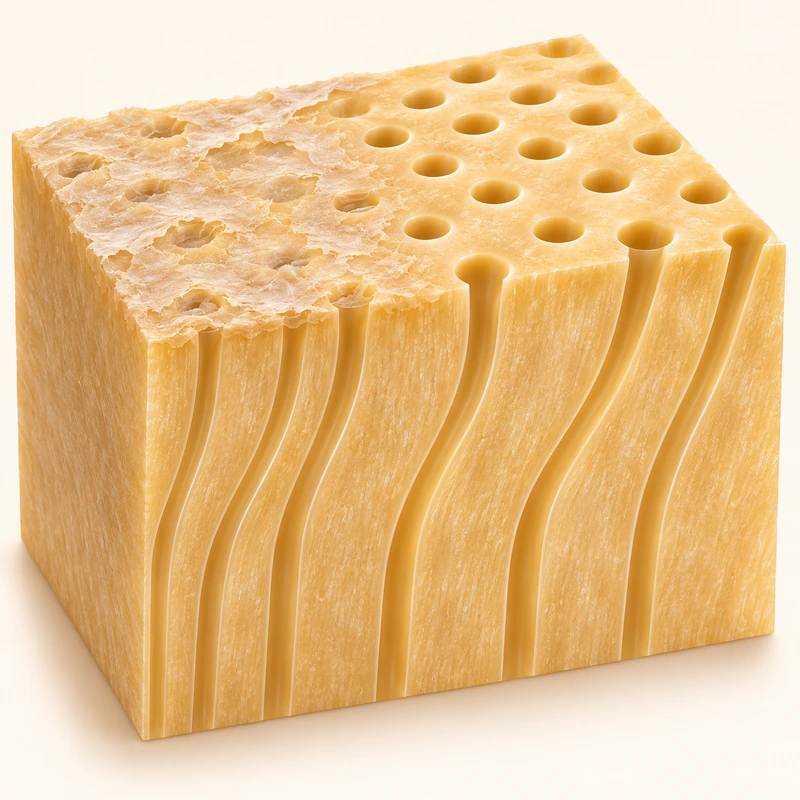
Dentine beneath enamel contains tiny tubules. Their openings are visible in the enlarged model.
An applicator spreads adhesive over the prepared surface. This treatment is performed at the preparation visit.
The indirect restoration has a specific fit. Final bonding is a separate step.
Dentine beneath enamel contains tiny tubules. Their openings are visible in the enlarged model.
An applicator spreads adhesive over the prepared surface. This treatment is performed at the preparation visit.
The indirect restoration has a specific fit. Final bonding is a separate step.
Freshly prepared dentine.
Early coverage of the prepared dentine.
How much enamel and dentine are present.
Three steps. No audio.
Each scene can also be selected manually.

Silent film with English on-screen text and simplified teaching images.
This protects selected grooves on tooth surfaces. IDS treats freshly prepared dentine for an indirect restoration.
The exposed dentine surface is sealed. Pulp exposure needs separate assessment and is a different clinical situation.
The aim is early protection of the prepared dentine. It cannot guarantee comfort for an individual tooth. Persistent symptoms should be assessed.
A preparation mainly in enamel presents a different situation. A clinical veneer study found a benefit particularly with more extensive dentine exposure.
A question to bring along
Which areas of my tooth remain in enamel after preparation?
Before an inlay, onlay or veneer, ask how the restoration will be prepared and bonded.
Choose an appointmentAppointment selection at DoctolibIDS is a preparatory adhesive technique. The subsequent bonding procedure and materials are selected accordingly.
Editorial research: . General information, not an individual diagnosis or treatment recommendation. Teaching illustrations are simplified and do not depict a patient case.
If you turn this on, this website stores which guides you open, separately from advertising preferences. The markers expire after a fixed 30-day period from activation. The list is not sent to us by this feature. You can turn it off here and delete the markers.
Other people using the same browser profile can also see the markers. German and English versions share one marker. Expired entries are removed the next time you open a page with this feature; deleting browser data may remove them earlier. “Viewed” means opened, not read or completed.