Is tip an appliance?
No. It describes a positional angle.

Tip is the mesiodistal angulation of a tooth: the inclination of its crown’s long axis along the dental arch, towards or away from the midline. It is one aspect of three-dimensional tooth position. It differs from torque, which describes inward or outward inclination, and from rotation around the tooth’s long axis.
For training & practice ↓
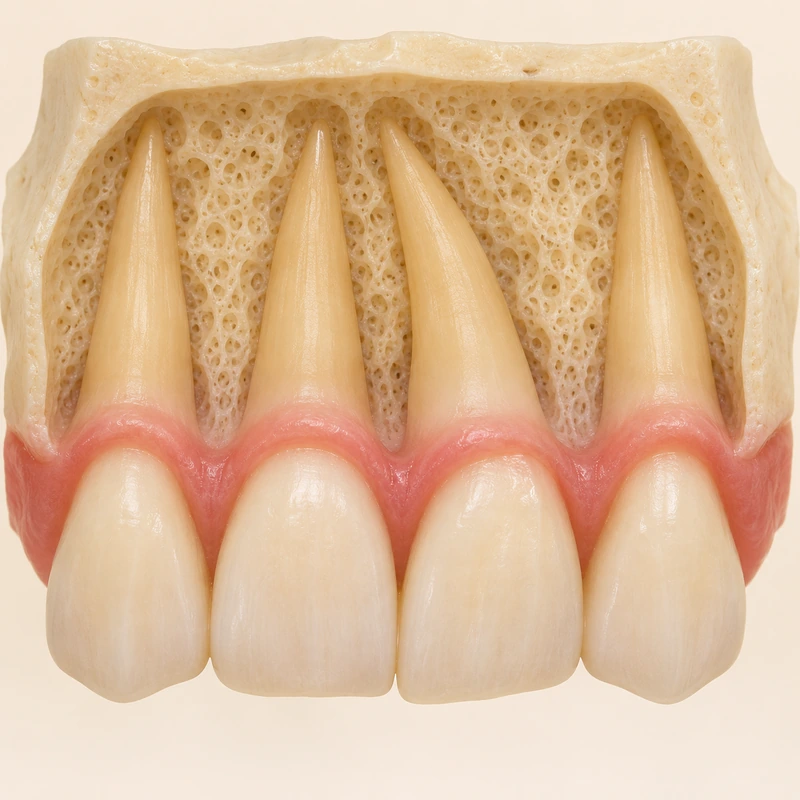
Tip describes angulation along the row of teeth. Mesial means towards the arch’s midline and distal means away from it. A defined reference direction is essential when describing the angle.
Torque concerns inclination towards the lip or cheek versus the tongue. Rotation is turning around the tooth’s long axis. A tooth can differ in more than one of these directions at once.
The intended angulation is planned and checked during treatment. A bracket’s prescribed angle or a digital target does not establish the tooth position actually achieved.
No. It describes a positional angle.
Mesial or distal along the arch.
No. The actual position needs checking.
Three steps. No audio.
Each scene can also be selected manually.

Silent educational film with German on-screen text and simplified teaching images. Not a patient case or a promised treatment outcome. The full English explanation is available as text.
Tip is mesiodistal angulation along the dental arch. Torque is buccolingual or labiolingual inclination, towards the outside or inside. The distinction concerns direction, not a ranking of treatment methods.
No. It describes a specific spatial direction. A tooth may look crooked because of rotation, torque or displacement instead.
A photograph may give an impression, but perspective and crown shape affect it. Planning uses appropriate clinical records and models.
No. Visible crown shape and the overall tooth axis are not equivalent. Root shape and position may need additional consideration when planning.
No. Planned and achieved movements may differ. Monitoring and, where appropriate, adjustments are part of treatment.
You can bring this question to your appointment:
What angulation is planned for this tooth, and how will crown and root position be assessed during treatment?
An individual examination can clarify the findings and suitable next steps.
Arrange an assessmentAppointment selection at DoctolibTip is mesiodistal angulation along the dental arch. Torque is buccolingual or labiolingual inclination, towards the outside or inside. The distinction concerns direction, not a ranking of treatment methods.
Editorial research: . General information, not an individual diagnosis or treatment recommendation. Teaching illustrations are simplified and do not depict a patient case.
If you turn this on, this website stores which guides you open, separately from advertising preferences. The markers expire after a fixed 30-day period from activation. The list is not sent to us by this feature. You can turn it off here and delete the markers.
Other people using the same browser profile can also see the markers. German and English versions share one marker. Expired entries are removed the next time you open a page with this feature; deleting browser data may remove them earlier. “Viewed” means opened, not read or completed.