Digital design
The laboratory can design a restoration in relation to the arch on a screen.

Dental technicians make crowns, bridges and dentures to a clinical prescription. An impression or scan provides the tooth shapes. The restoration is designed and made, then its fit and function are checked in the mouth.
For training & practice ↓
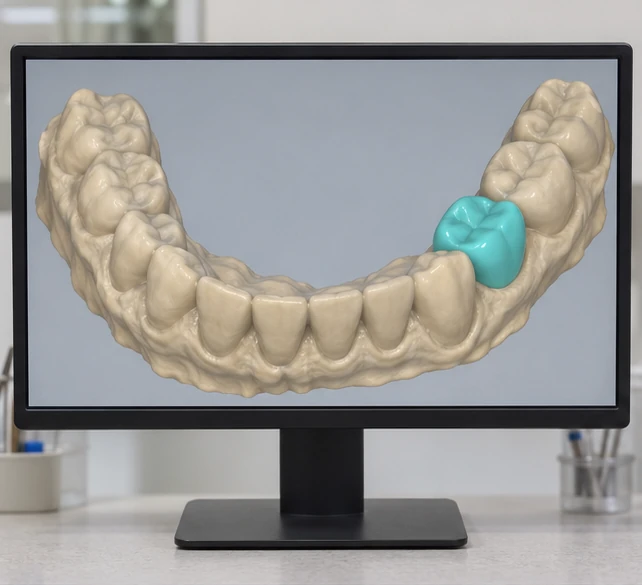
The laboratory can design a restoration in relation to the arch on a screen.
A working cast makes shapes and neighbouring teeth tangible during fabrication and checks.
A shade reference next to a natural tooth adds colour information to the shape data.
The laboratory can design a restoration in relation to the arch on a screen.
A working cast makes shapes and neighbouring teeth tangible during fabrication and checks.
A shade reference next to a natural tooth adds colour information to the shape data.
The laboratory can design a restoration in relation to the arch on a screen.
A working cast makes shapes and neighbouring teeth tangible during fabrication and checks.
A shade reference next to a natural tooth adds colour information to the shape data.
Three steps. No audio.
Each scene can also be selected manually.

Silent film with English on-screen text and simplified teaching images.
The neighbouring teeth, opposing arch, bite, intended material and shade all matter. For a front tooth, information about the incisal edge and visible neighbours can be especially helpful.
The neighbouring teeth, opposing arch, bite, intended material and shade all matter. For a front tooth, information about the incisal edge and visible neighbours can be especially helpful.
Software may assist with design and a machine can mill the material. A technician or dental professional evaluates the shape and contacts and finishes the surface. The steps vary with the fabrication method.
It allows assessment of margins, tooth contacts, bite and colour in the mouth. Tell the team if it feels high or the shape differs from what you expected.
A question to ask
What shape and colour information will the laboratory get, and what can we check at try-in?
Choose an appointment to discuss your own tooth or restoration.
Choose an appointmentAppointment selection at DoctolibAn accurate surface record shows tooth form. Jaw relationship, shade and intended function are separate parts of the laboratory prescription.
Editorial research: . General information, not an individual diagnosis or treatment recommendation. Teaching illustrations are simplified and do not depict a patient case.
If you turn this on, this website stores which guides you open, separately from advertising preferences. The markers expire after a fixed 30-day period from activation. The list is not sent to us by this feature. You can turn it off here and delete the markers.
Other people using the same browser profile can also see the markers. German and English versions share one marker. Expired entries are removed the next time you open a page with this feature; deleting browser data may remove them earlier. “Viewed” means opened, not read or completed.