What often stays at the laboratory?
The printed working model is a technical aid.

Dental 3D printing turns digital data into a physical object by adding material in layers. The result may be a working model for a laboratory. A device worn in the mouth requires a material and manufacturing process suitable for that particular use.
For training & practice ↓
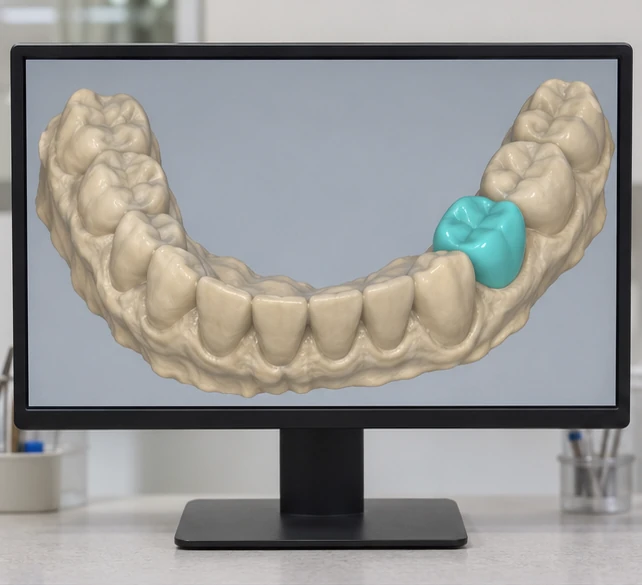
Tooth surfaces are recorded digitally. The laboratory decides which part of the dataset the physical model must reproduce.
Software divides the shape into layers. Many dental printers use light to harden the chosen resin in selected areas.
Supports are removed where needed and the object is finished as required for its material. Shape, surface and dimensions are then checked against its purpose.
The printed working model is a technical aid.
They may mark the position of temporary print supports.
Material, production and finishing must be appropriate for the application.
Three steps. No audio.
Each scene can also be selected manually.

Silent film with English on-screen text and simplified teaching images.
Printing builds material up. Milling removes it from a blank. Both can start from a digital design.
Not necessarily. A printed arch can be a working aid while the actual crown is milled. Ask how the piece fitted in your mouth will be made.
Supports connect parts to the build platform or support overhanging sections. Removal and surface finishing depend on the process.
A model resin is not automatically suitable for mucosal contact or long-term wear. An oral appliance needs a material with the correct intended use and suitable processing.
A question to bring along
Which part stays in the lab and which will I wear in my mouth?
When discussing a restoration, ask about the material and manufacturing process for the fitted part.
Choose a dental appointmentAppointment selection at DoctolibA study comparing multiple printers examined the accuracy of working models. Its findings cannot automatically be applied to splints or crowns.
Editorial research: . General information, not an individual diagnosis or treatment recommendation. Teaching illustrations are simplified and do not depict a patient case.
If you turn this on, this website stores which guides you open, separately from advertising preferences. The markers expire after a fixed 30-day period from activation. The list is not sent to us by this feature. You can turn it off here and delete the markers.
Other people using the same browser profile can also see the markers. German and English versions share one marker. Expired entries are removed the next time you open a page with this feature; deleting browser data may remove them earlier. “Viewed” means opened, not read or completed.