Is it a punishment for tongue position?
No. The purpose and design should be explained to the child. It is meant to support a specific treatment goal.

A palatal tongue crib is an orthodontic appliance that limits space just behind the upper incisors. For selected children with an anterior open bite, it can discourage placing the tongue between the teeth or interrupt a sucking habit.
For training & practice ↓
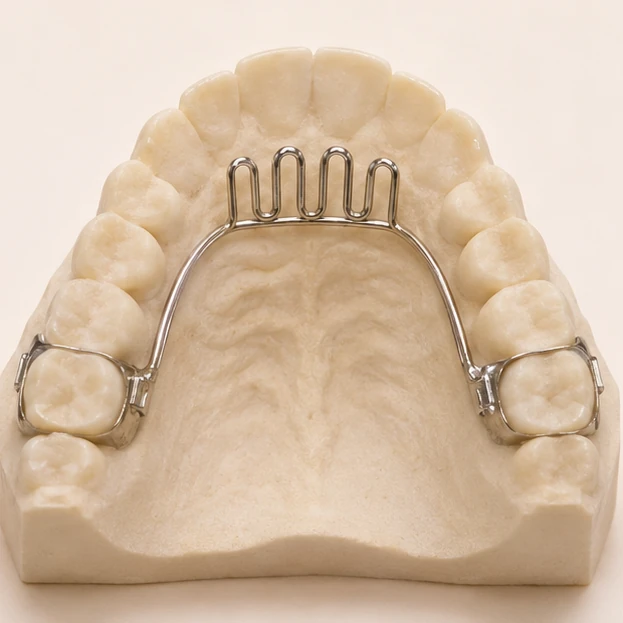
The rounded crib sits on the palate side. It limits the space the tongue can occupy between the front teeth.
In this fixed design, wire connects the crib to the posterior teeth. Other designs are built into a removable plate.
When the front teeth remain apart on biting, the clinician considers the size of the gap, habits and growth together.
No. The purpose and design should be explained to the child. It is meant to support a specific treatment goal.
No. The contribution of skeletal growth, habits and tooth positions varies.
That depends on the design. A crib attached to bands usually remains fixed until the appointment.
Three steps. No audio.
Each scene can also be selected manually.

Silent film with English on-screen text and simplified teaching images.
A crib limits anterior tongue placement. An active plate uses a screw or spring to move teeth.
Mention sucking habits, tongue posture and mouth breathing. The team can consider whether further assessment or functional support would help.
Contact the orthodontist. Avoid pulling on the loops or attachments yourself.
The course depends in part on growth and whether habits persist. Reviews assess whether the front teeth approach each other and the contact is maintained.
When an anterior open bite is present
Which habit or function is the crib intended to address for my child?
Ask an orthodontist to assess the cause and appropriate treatment of an open bite.
Choose an appointmentAppointment selection at DoctolibThe crib changes the conditions for tongue placement or a sucking habit. An anterior open bite can have several contributing factors that a crib alone cannot address.
Editorial research: . General information, not an individual diagnosis or treatment recommendation. Teaching illustrations are simplified and do not depict a patient case.
If you turn this on, this website stores which guides you open, separately from advertising preferences. The markers expire after a fixed 30-day period from activation. The list is not sent to us by this feature. You can turn it off here and delete the markers.
Other people using the same browser profile can also see the markers. German and English versions share one marker. Expired entries are removed the next time you open a page with this feature; deleting browser data may remove them earlier. “Viewed” means opened, not read or completed.