
Dental insights · Everyday tips
Jaw joint pain when chewing or yawning
If the area in front of your ear hurts when you take a bite or yawn, the pain may come from your jaw joint, chewing muscles or teeth. What to do next depends on whether you can open your mouth and drink as usual, and whether you also have a fever or swelling.
Published on
 AI-generated
In this guide
When should I get help?
Call 112 immediately
In Germany, call the emergency services if swelling in your mouth or neck makes breathing or swallowing difficult. Also call if new chest pressure or pain spreads to your jaw, especially with breathlessness or a cold sweat.
Get assessed today
If your jaw suddenly sticks open, or you can barely open your mouth and find it hard to drink, seek urgent dental or emergency care today. Do not try to force the jaw into place. Call a dentist or an emergency dental service if swelling in your face is increasing or toothache is accompanied by fever.
Find the emergency dental service in Cologne
Book an examination
Book a dental appointment soon if the pain persists, keeps returning at mealtimes or it becomes harder to open your mouth. An occasional painless click in a jaw that moves freely is common and usually needs no treatment on its own.
Is it the joint, a muscle or a tooth?
The jaw joint sits just in front of your ear. Pain you recognise in that spot that changes when you chew, open your mouth or move your jaw sideways is a useful clue for the examination. Pain on just one side can still come from outside the joint.
An ache in your cheek or temple can come from the chewing muscles. The large chewing muscle in your cheek is called the masseter. Muscle pain can also be felt away from its source.
Does a particular tooth react to heat or cold, or hurt each time you bite? Mention this when you call. Your teeth and gums need to be checked as well. Where you feel the pain is only one part of finding its cause.
What moves when you open your mouth?
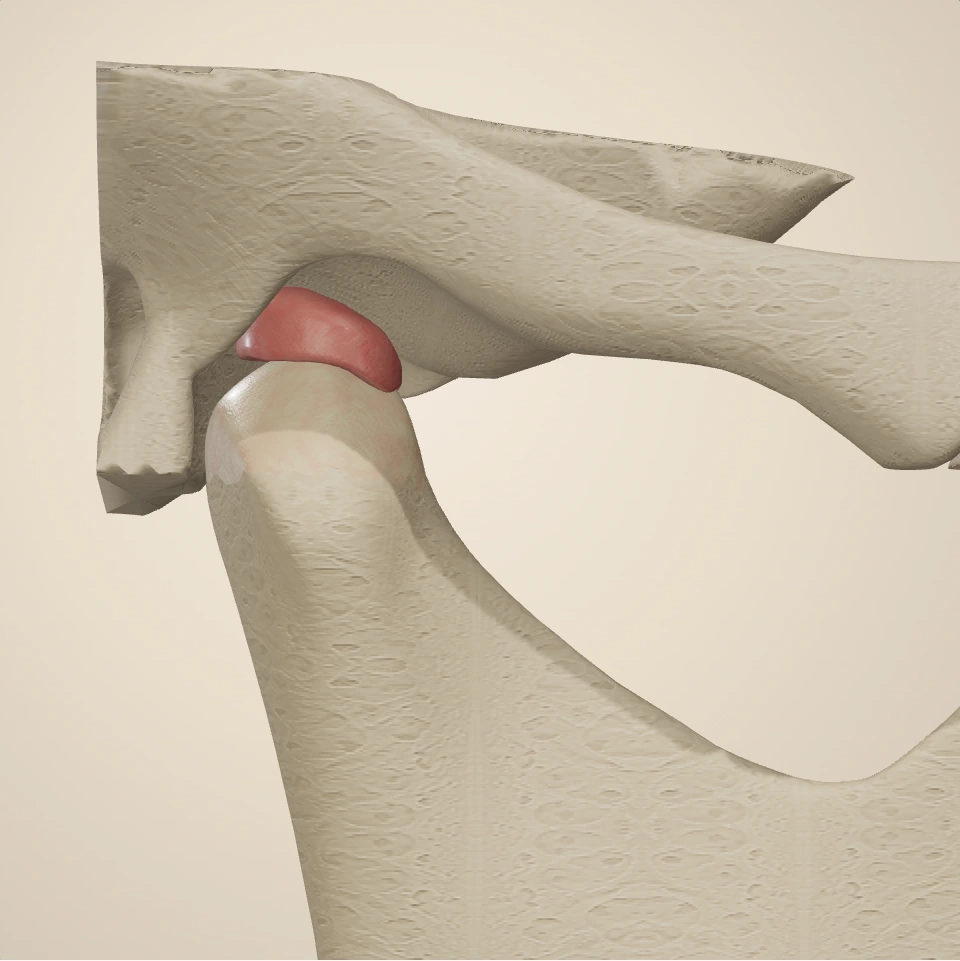
Compare the close-ups with the mouth closed and open. Start the animation and watch how the disc moves with the joint head beneath it. You can rotate the joint to follow the movement from the side. You can also show the cheek muscle (masseter). The model illustrates one example of jaw movement. An examination is needed to identify the cause of your pain.
Why does my jaw click? The jaw joint in 3D
Rotate the right jaw joint to see how the joint head and disc move as the mouth opens and closes. Two further examples show a forward-displaced joint disc and contraction of the chewing muscle during clenching.

Drag with a mouse or finger to rotate. Use the arrow keys on a keyboard.
The joint disc rests between the head of the lower jaw and the socket in the temporal bone.
The three examples explained
- Joint movement
- As the mouth opens, the joint head and disc glide forwards together. Relative to the joint head, the disc rotates slightly backwards.
- TMD and clicking
- One type of temporomandibular disorder (TMD) involves the disc. A disc lying in front of the joint head can slip back between the joint surfaces during opening. As the joint head slides beneath the disc, you may hear a click. This is called disc displacement with reduction. The disc can retain its normal shape. As the jaw closes, the disc can slip in front of the joint head again. This may produce a second click. Painless clicking is common when the jaw moves freely. A click alone cannot tell you where the disc sits. Seek an assessment if the jaw hurts, opening becomes limited or the jaw keeps locking.
- Bruxism
- During clenching, the chewing muscles tighten while the jaw barely moves. During grinding, the teeth slide against each other. Both can occur while awake or asleep. During clenching the disc can stay in its normal position, as shown here.
The disc is thinner in the middle and moves with the head of the mandible.
The rounded upper end of the mandible moves relative to the temporal bone.
This bony slope at the front of the joint socket guides the opening movement.
The disc is thinner in the middle and moves with the head of the mandible.
The rounded upper end of the mandible moves relative to the temporal bone.
This bony slope at the front of the joint socket guides the opening movement.
Anatomical source models BodyParts3D, © The Database Center for Life Science (CC BY 4.0). Adaptations and licence details
What can I try at mealtimes and during the day?
For mild symptoms without warning signs, choose foods that need little chewing for a short time and avoid hard crusts or large bites. Gradually return to your usual food as chewing becomes more comfortable.
Skip chewing gum for now. When concentrating, notice whether you are pressing your teeth together. At rest they can sit slightly apart. If warmth soothes your cheek muscles, try a comfortably warm cloth. Avoid forcing a painful or locked jaw open.
How does a dentist find the cause?
One specific observation is particularly useful. Does opening your mouth already hurt, or does it hurt only when you bite down? Point to where you first feel it. Say when it began and whether your jaw has caught or locked since then.
The dentist checks your jaw movement, joints, chewing muscles and teeth. When gently pressing on the joint or a muscle, they will ask whether it reproduces the pain you recognise. This helps distinguish joint and muscle pain. Whether an X-ray or MRI would answer a remaining question depends on the findings.
Jaw assessment and questions to discuss at our Cologne practice
Frequently asked questions about jaw joint pain
Is a click when I yawn dangerous?
A sound without pain in a jaw that moves normally is common. If you also have pain or the jaw catches, arrange an examination.
Can jaw joint pain feel like earache?
Yes. Pain around the joint can feel like earache. Mention whether chewing or yawning changes it. Persistent ear symptoms or a change in hearing also warrant a medical examination of the ear.
Do I need a splint for jaw joint pain?
That depends on the findings and the aim of treatment. A splint can help protect teeth from wear. The evidence for relieving joint or muscle pain is less clear. Ask what the splint is intended to do for you and when the outcome will be reviewed.
Sources and further information
- DC/TMD diagnostic criteria for muscle and joint pain (PDF)
- US National Institute of Dental and Craniofacial Research on jaw disorders
- University College London Hospitals on self-care for jaw symptoms
- NHS on warning signs of a dental abscess
- MedlinePlus on a dislocated jaw
- German federal health portal on signs of a heart attack and the 112 emergency number