Does a small gap prove tracking loss?
No. One photograph shows neither the full fit nor changes since switching trays.

Tracking describes how closely the actual tooth position matches the planned stage in an aligner series. A persistent local gap or poor engagement of an attachment may suggest that a tooth is not following the intended movement.
For training & practice ↓
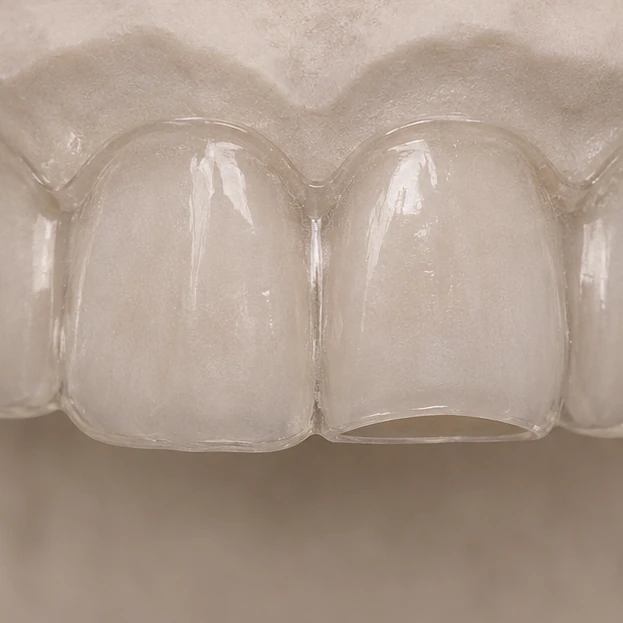
In this model there is space between the plastic and a tooth edge. The shape, location and persistence of a gap matter together.
The clinician checks whether the tray engages other teeth and attachments. A photograph can help prepare for the review.
The tray number, actual position and planned digital stage are compared. The findings guide the next step.
No. One photograph shows neither the full fit nor changes since switching trays.
If the fit is in doubt, contact the treating practice before switching.
The tray number, the tooth involved, how long the problem has persisted and a well-lit photo.
Three steps. No audio.
Each scene can also be selected manually.

Silent film with English on-screen text and simplified teaching images.
Tracking describes how a tooth follows a planned step. Refinement is a further set of aligners planned after reassessment.
This small bonded shape helps the tray deliver certain movements. Losing it or failing to engage it can alter how the tray fits.
The clinician first checks fit, tray identity, attachments and wear history. A new scan is an option if replanning is needed.
Do not reshape it yourself. A distorted tray cannot reliably deliver the planned forces.
When a tray stands away from a tooth
Does the attachment engage properly, and do my teeth still match this stage?
During treatment, ask the team supervising your aligners to check the current tray.
Choose an appointmentAppointment selection at DoctolibGood fit is an important clinical sign. A fully seated plastic margin does not directly show the position of the root.
Editorial research: . General information, not an individual diagnosis or treatment recommendation. Teaching illustrations are simplified and do not depict a patient case.
If you turn this on, this website stores which guides you open, separately from advertising preferences. The markers expire after a fixed 30-day period from activation. The list is not sent to us by this feature. You can turn it off here and delete the markers.
Other people using the same browser profile can also see the markers. German and English versions share one marker. Expired entries are removed the next time you open a page with this feature; deleting browser data may remove them earlier. “Viewed” means opened, not read or completed.