What does a line on the graph represent?
A measured or calculated path of a reference point.

Axiography records mandibular movement relative to the head. The data can describe the paths of reference points near the joints, for example. These records may assist with selected functional or prosthodontic questions.
For training & practice ↓
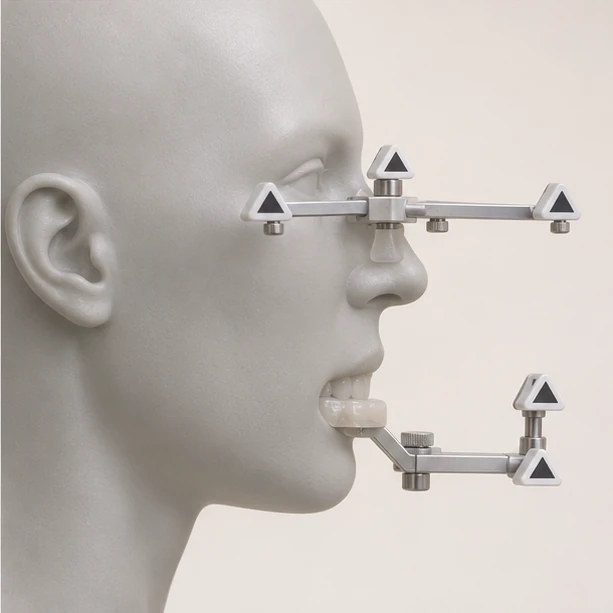
One part of the measuring system provides a reference on the head. Another follows the lower jaw. The instrument records changes in their relationship.
Protrusive or sideways movements may be recorded repeatedly, depending on the question. The way the attachment is mounted on the mandible can affect measured values.
Individual movement data can help adjust an articulator. It then simulates selected jaw movements on casts outside the mouth.
A measured or calculated path of a reference point.
The reference system aligned to the head.
The treating clinician in the context of symptoms and the functional examination.
Three steps. No audio.
Each scene can also be selected manually.

Silent film with English on-screen text and simplified teaching images.
A transfer facebow relates the upper jaw to a reference. Axiography records movement over time.
Axiography supplies movement data. It does not directly image the joint disc. Symptoms and examination findings guide the choice of further tests.
Repetition helps assess how reproducible the path is. Attachment position, how the movement is performed and cooperation can affect the record.
The examination should answer a specific question. Planning a crown alone does not establish a need for it. Ask how the result would affect treatment planning.
A question to bring along
What question would recording movement answer in my case?
Examination of the joints, chewing muscles and jaw movement helps guide further assessment.
Choose a dental appointmentAppointment selection at DoctolibComparisons require a documented attachment method and comparable movement tasks.
Editorial research: . General information, not an individual diagnosis or treatment recommendation. Teaching illustrations are simplified and do not depict a patient case.
If you turn this on, this website stores which guides you open, separately from advertising preferences. The markers expire after a fixed 30-day period from activation. The list is not sent to us by this feature. You can turn it off here and delete the markers.
Other people using the same browser profile can also see the markers. German and English versions share one marker. Expired entries are removed the next time you open a page with this feature; deleting browser data may remove them earlier. “Viewed” means opened, not read or completed.