When is debonding scheduled?
Usually at the end of active treatment with fixed braces.

Debonding is the controlled removal of bonded brackets. The team then checks the enamel, removes remaining resin and discusses how to retain the new tooth position.
For training & practice ↓
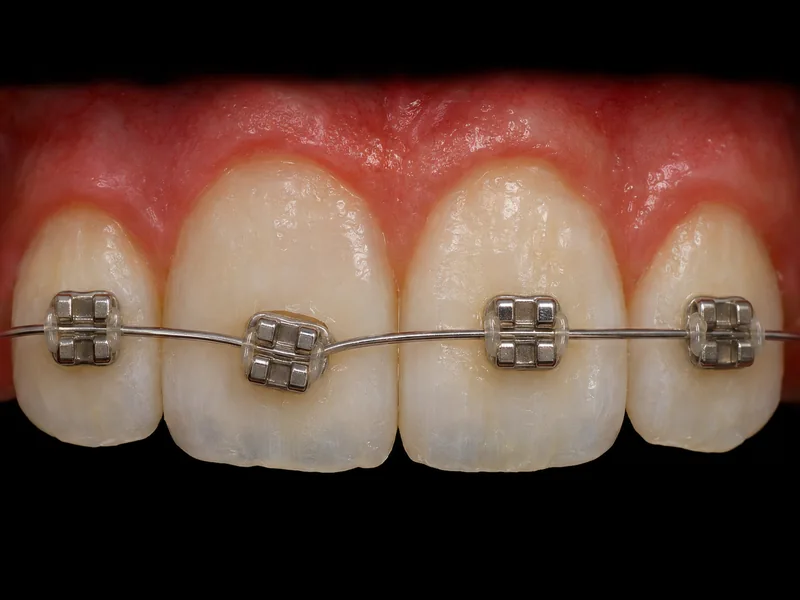
The team releases the bond with an instrument suited to the bracket system. The metal or ceramic bracket body is lifted away.
A thin layer of bonding resin may remain on the enamel. It is carefully removed and the surface is smoothed.
Teeth may move after active treatment ends. The team explains the appropriate retainer and follow-up.
Usually at the end of active treatment with fixed braces.
Small remnants can remain and need checking.
Brackets and adhesive should be removed by the treating team.
Three steps. No audio.
Each scene can also be selected manually.

Silent film with English on-screen text and simplified teaching images.
An accidentally detached bracket interrupts treatment. Planned debonding is carried out under controlled conditions.
The aim is to preserve enamel. Laboratory studies show that the instruments and finishing steps affect surface roughness. They cannot predict the outcome for one individual tooth.
Chalky patches can also reflect previous mineral loss. The dentist distinguishes these by examining the surface.
Show the spot at a review. Scraping or sanding it at home can damage the tooth.
A question to bring along
Which areas should be checked again at follow-up?
Contact your treating orthodontic team for removal and retention.
Choose an appointmentAppointment selection at DoctolibReleasing a bracket and removing residual resin are distinct steps.
Editorial research: . General information, not an individual diagnosis or treatment recommendation. Teaching illustrations are simplified and do not depict a patient case.
If you turn this on, this website stores which guides you open, separately from advertising preferences. The markers expire after a fixed 30-day period from activation. The list is not sent to us by this feature. You can turn it off here and delete the markers.
Other people using the same browser profile can also see the markers. German and English versions share one marker. Expired entries are removed the next time you open a page with this feature; deleting browser data may remove them earlier. “Viewed” means opened, not read or completed.