Is this the name of the cause?
It describes a pattern of gum changes.

Desquamative gingivitis describes distinctly red, tender gums whose surface layer may peel away. Several conditions can produce this pattern, including oral lichen planus and mucous membrane pemphigoid.
For training & practice ↓
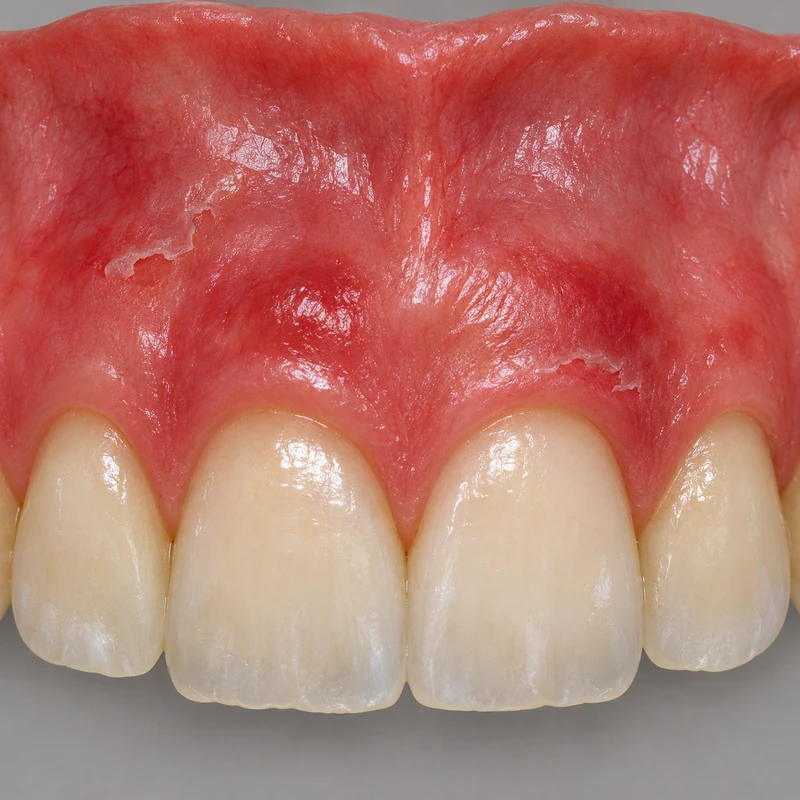
The gums may appear shiny red, sore or superficially eroded. Brushing or eating can cause burning.
Symptoms on the cheeks, skin or eyes can matter. Inflammatory mucosal disease may involve more than one site.
In unexplained cases tissue examination and direct immunofluorescence can help distinguish underlying conditions.
It describes a pattern of gum changes.
Different conditions can look similar.
Eye irritation, visual changes and problems at other mucosal sites.
Three steps. No audio.
Each scene can also be selected manually.

Silent film with English on-screen text and simplified teaching images.
It develops in response to bacterial plaque. Peeling lesions may occur with little plaque and need investigation.
Mechanical irritation can increase soreness but does not automatically explain persistent peeling.
Examining tissue structure and sometimes immune deposits can help identify the specific disorder.
Seek same-day eye assessment for a newly painful red eye or deteriorating vision.
Discussing a mucosal finding
Would a biopsy or another specialist assessment be helpful?
Arrange prompt assessment if gum tissue repeatedly becomes sore or peels.
Choose an appointmentAppointment selection at DoctolibThe underlying cause determines treatment and follow-up.
Editorial research: . General information, not an individual diagnosis or treatment recommendation. Teaching illustrations are simplified and do not depict a patient case.
If you turn this on, this website stores which guides you open, separately from advertising preferences. The markers expire after a fixed 30-day period from activation. The list is not sent to us by this feature. You can turn it off here and delete the markers.
Other people using the same browser profile can also see the markers. German and English versions share one marker. Expired entries are removed the next time you open a page with this feature; deleting browser data may remove them earlier. “Viewed” means opened, not read or completed.