Is stainless steel always nickel-free?
No. Many orthodontic steels contain nickel. Product information is required for a specific answer.

In dentistry, stainless steel usually refers to corrosion-resistant, iron-based alloys containing chromium and, depending on the grade, other elements. They are used for different components. The umbrella term means neither automatically nickel-free nor suitable for every application.
For training & practice ↓
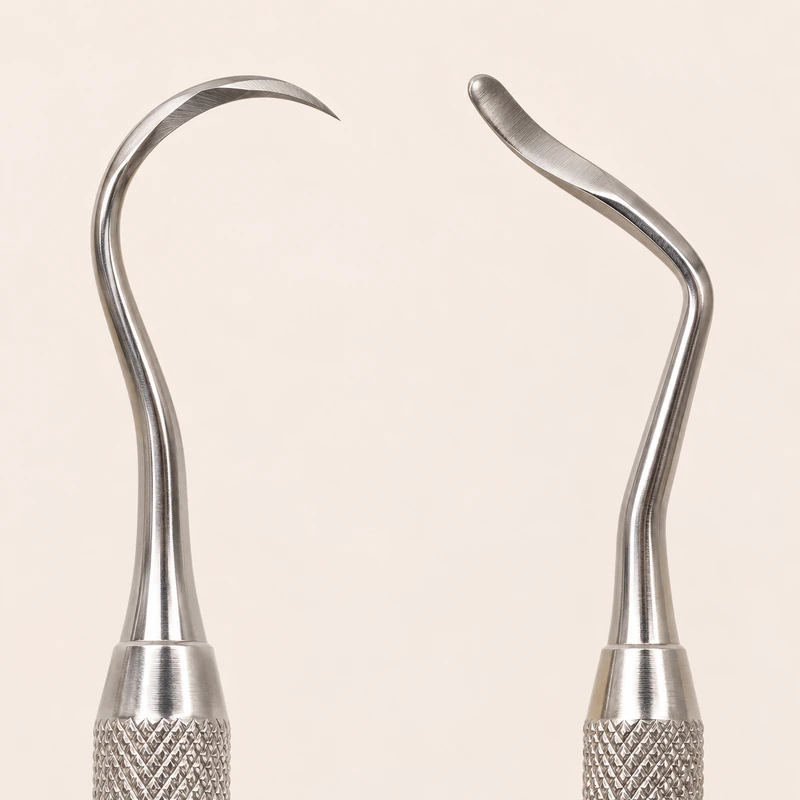
Different steel grades exist. Composition and processing determine suitability for a particular component.
An instrument, orthodontic wire and preformed crown serve different functions. Their requirements are not identical.
A silver-coloured surface reveals neither nickel content nor sterility. Material information and processing instructions matter.
No. Many orthodontic steels contain nickel. Product information is required for a specific answer.
This cannot be decided generally. Skin sensitivity and oral reactions differ; symptoms and materials need professional assessment.
No. Their functions and designs differ; similar material names do not establish identical composition.
Three steps. No audio.
Each scene can also be selected manually.

Silent educational film with German on-screen text and simplified teaching images. Not a patient case or a promised treatment outcome. The full English explanation is available as text.
Both may contain nickel, but they are different alloy families with different mechanical behaviour.
No. Many orthodontic steels contain nickel. Product information is required for a specific answer.
This cannot be decided generally. Skin sensitivity and oral reactions differ; symptoms and materials need professional assessment.
No. Their functions and designs differ; similar material names do not establish identical composition.
No. Design and manufacturer instructions determine suitable reprocessing. The material name alone does not authorize a method.
No. Visible cleanliness, disinfection and sterility are different things requiring appropriate checks.
You can raise this editorially suggested question during your consultation.
Which precise steel grade does the planned component contain, and are known allergies relevant?
Which precise steel grade does the planned component contain, and are known allergies relevant?
Request a consultationAppointment selection at DoctolibA particular component's suitability cannot be inferred solely from the term stainless steel.
Editorial research: . General information, not an individual diagnosis or treatment recommendation. Teaching illustrations are simplified and do not depict a patient case.
If you turn this on, this website stores which guides you open, separately from advertising preferences. The markers expire after a fixed 30-day period from activation. The list is not sent to us by this feature. You can turn it off here and delete the markers.
Other people using the same browser profile can also see the markers. German and English versions share one marker. Expired entries are removed the next time you open a page with this feature; deleting browser data may remove them earlier. “Viewed” means opened, not read or completed.