Which surfaces come first?
K stands for Kauflächen, the chewing surfaces.

KAI is a German memory aid for brushing in order. Children practise chewing surfaces first, then the outer surfaces and finally the inner surfaces. Adults help with areas children still miss.
For training & practice ↓
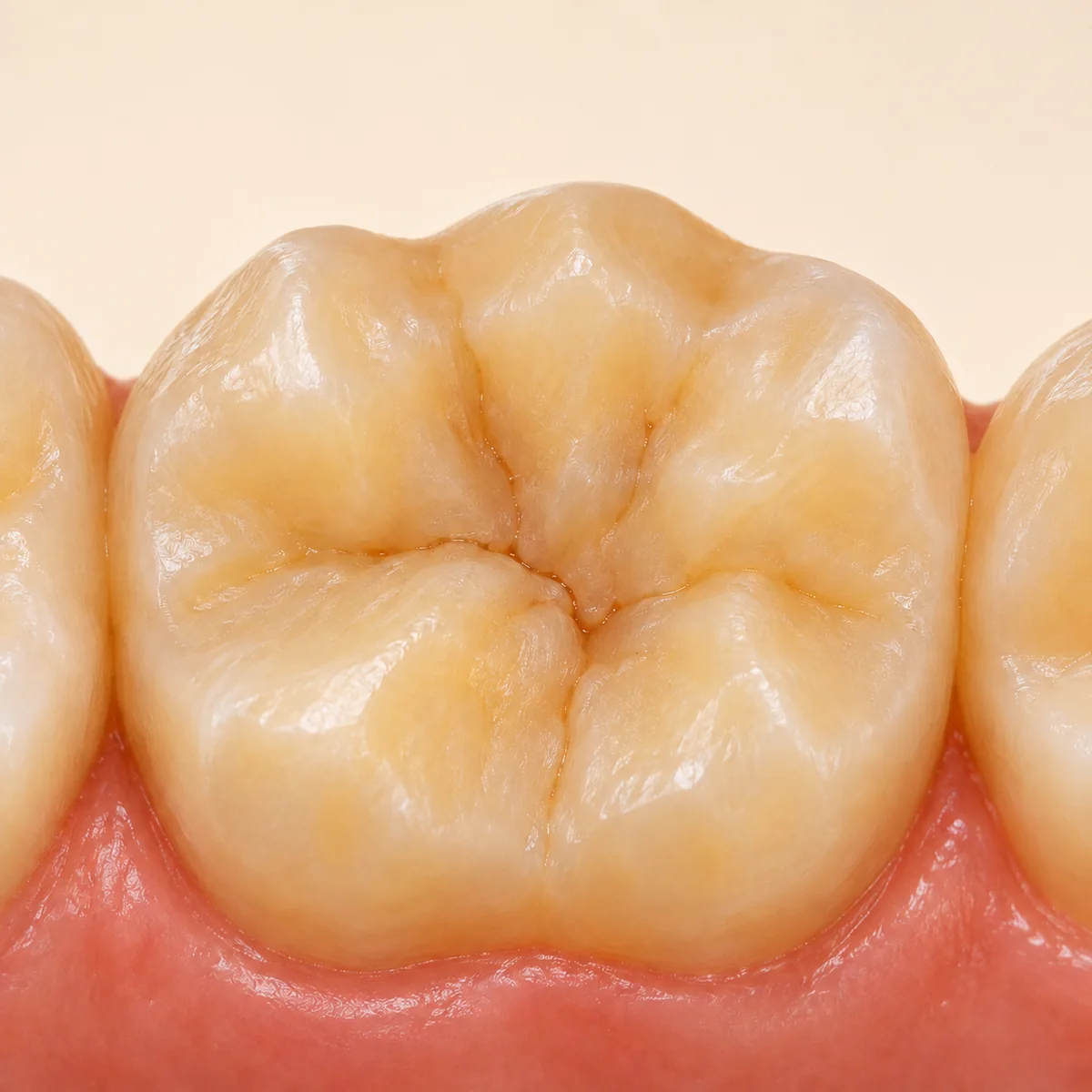
Children start with short back-and-forth strokes on the chewing surfaces of the back teeth. Both sides of each jaw are included.
These surfaces face the lips or cheeks. Small circles help the child work along the row. A familiar sequence makes missed areas easier to spot.
The surfaces facing the tongue or palate come last. Brush from the gum towards the crown. Children often need help reaching behind the front teeth.
K stands for Kauflächen, the chewing surfaces.
A stands for Außenflächen, the surfaces facing the lips and cheeks.
I stands for Innenflächen, facing the tongue or palate.
Three steps. No audio.
Each scene can also be selected manually.

Silent educational film with German on-screen text and simplified teaching images. Not a patient case or a promised treatment outcome. The full English explanation is available as text.
The letters help a child remember the order. Effective brushing also takes dexterity. Adults should check and finish surfaces the child cannot reliably clean.
Children start with short back-and-forth strokes on the chewing surfaces of the back teeth. Both sides of each jaw are included.
These surfaces face the lips or cheeks. Small circles help the child work along the row. A familiar sequence makes missed areas easier to spot.
The surfaces facing the tongue or palate come last. Brush from the gum towards the crown. Children often need help reaching behind the front teeth.
Bringing the brush in sideways can help reach the lower chewing surface. Ask for a demonstration on the tooth if needed.
The letters help a child remember the order. Effective brushing also takes dexterity. Adults should check and finish surfaces the child cannot reliably clean.
A question you could ask
Which surfaces should I pay special attention to when finishing my child’s brushing?
A demonstration in the child’s own mouth can make the sequence easier to follow.
Discuss at a dental appointmentAppointment selection at DoctolibThe letters help a child remember the order. Effective brushing also takes dexterity. Adults should check and finish surfaces the child cannot reliably clean.
Editorial research: . General information, not an individual diagnosis or treatment recommendation. Teaching illustrations are simplified and do not depict a patient case.
If you turn this on, this website stores which guides you open, separately from advertising preferences. The markers expire after a fixed 30-day period from activation. The list is not sent to us by this feature. You can turn it off here and delete the markers.
Other people using the same browser profile can also see the markers. German and English versions share one marker. Expired entries are removed the next time you open a page with this feature; deleting browser data may remove them earlier. “Viewed” means opened, not read or completed.