Does all snoring mean sleep apnoea?
No. Frequency, breathing effort, observed pauses and daytime symptoms help guide how promptly to investigate.

In childhood obstructive sleep apnoea, the upper airway repeatedly narrows or closes in sleep despite continued breathing effort. Regular snoring with breathing pauses, laboured breathing or concerning daytime behaviour warrants paediatric assessment.
For training & practice ↓
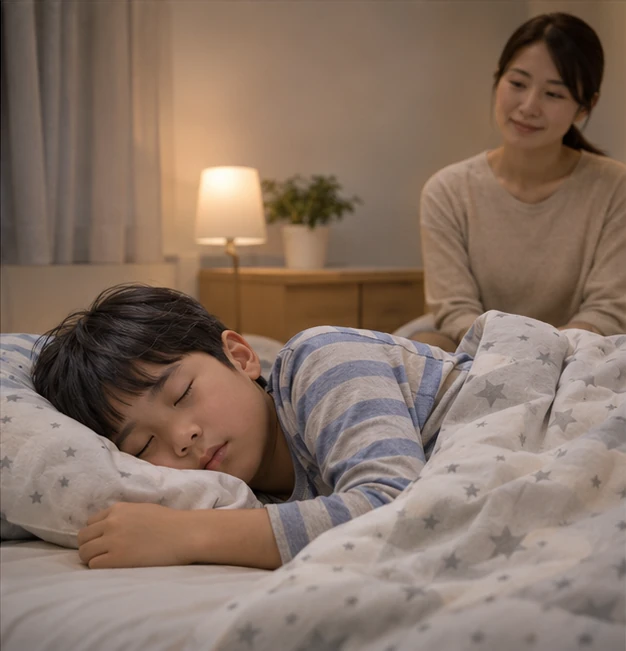
Regular snoring, gasping and laboured breathing are important clues. A sleeping child may look completely comfortable at other times.
Enlarged tonsils or adenoids may narrow the airway. Dental observations such as mouth breathing can prompt paediatric or ENT assessment.
Some children show restlessness, concentration problems or tiredness. These have many possible causes and are considered alongside night-time findings.
No. Frequency, breathing effort, observed pauses and daytime symptoms help guide how promptly to investigate.
No. Oral findings may provide clues but cannot replace paediatric sleep assessment.
The paediatric clinician can coordinate ENT or paediatric sleep assessment as needed.
Three steps. No audio.
Each scene can also be selected manually.

Silent film with English on-screen text and simplified teaching images.
Causes, symptoms and diagnostic criteria differ in children. An adult risk questionnaire is insufficient for this question.
Note how regularly snoring occurs, whether there is gasping and how the child behaves during the day. Observations inform the appointment but do not replace measurement.
Depending on the findings, the team examines the nose and throat and may arrange a paediatric sleep study. Polysomnography records sleep and breathing together.
No. Assessment and treatment must suit the child’s age, cause and growth. An adult appliance is not a do-it-yourself treatment for childhood snoring.
When a child repeatedly breathes abnormally during sleep
Would an ENT examination and a paediatric sleep assessment be appropriate?
Arrange a paediatric appointment for recurring night-time breathing problems. In Germany, call 112 for acute severe breathing difficulty.
Choose a dental appointmentAppointment selection at DoctolibBreathing effort continues during obstruction. A single image or the loudness of the snoring does not establish severity.
Editorial research: . General information, not an individual diagnosis or treatment recommendation. Teaching illustrations are simplified and do not depict a patient case.
If you turn this on, this website stores which guides you open, separately from advertising preferences. The markers expire after a fixed 30-day period from activation. The list is not sent to us by this feature. You can turn it off here and delete the markers.
Other people using the same browser profile can also see the markers. German and English versions share one marker. Expired entries are removed the next time you open a page with this feature; deleting browser data may remove them earlier. “Viewed” means opened, not read or completed.