Does loud mean dangerous?
Loudness measures neither breathing pauses nor oxygen drops.

In primary snoring, breathing produces sound during sleep and assessment finds no other sleep-related breathing disorder. Loudness alone cannot establish this.
For training & practice ↓
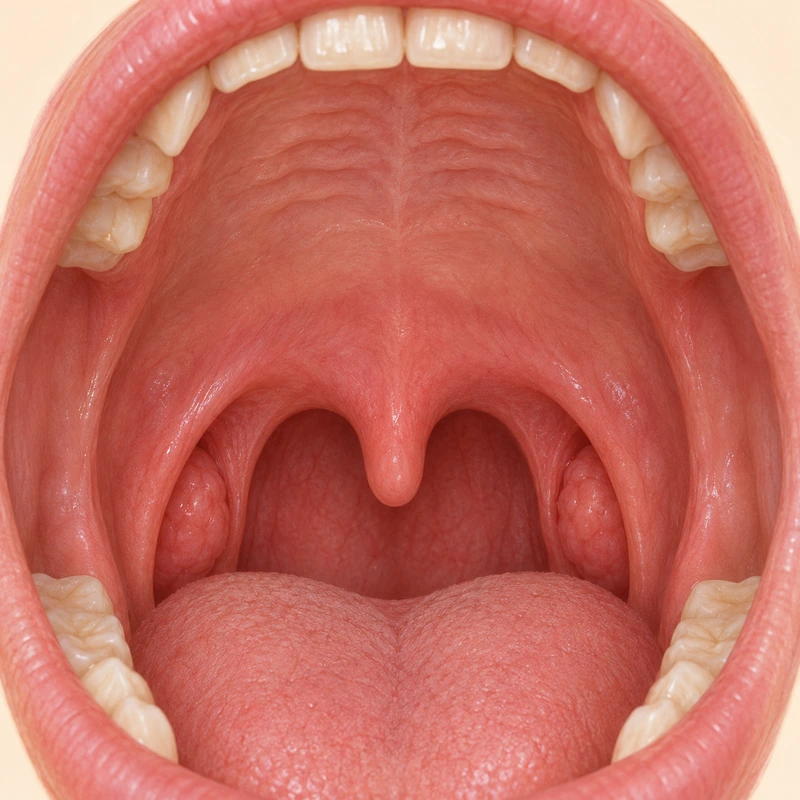
Air passing through the upper airway during sleep can make soft tissues in the throat vibrate and produce sound.
Reports of breathing pauses, gasping at night or dozing in the daytime help guide medical assessment.
An overnight assessment can help identify other sleep-related breathing problems when indicated.
Loudness measures neither breathing pauses nor oxygen drops.
Observed pauses warrant medical assessment and sometimes specialist sleep evaluation.
Describe frequency, any relation to sleep position and daytime symptoms.
Three steps. No audio.
Each scene can also be selected manually.

Silent film with English on-screen text and simplified teaching images.
In obstructive sleep apnoea the airway repeatedly narrows or closes. Snoring can accompany it.
A recording documents a sound. It does not reliably assess respiratory effort, airflow and oxygen levels together.
After medical assessment a mandibular advancement device may be considered in suitable cases. Tooth and jaw health also matter.
Newly observed breathing pauses or marked daytime sleepiness merit reassessment.
A question to bring along
Which medical findings should we have before assessing an oral appliance?
Bring existing sleep assessment results to a dental appliance consultation.
Choose an appointmentAppointment selection at DoctolibA snoring recording captures sound. A sleep assessment measures additional physiological signals.
Editorial research: . General information, not an individual diagnosis or treatment recommendation. Teaching illustrations are simplified and do not depict a patient case.
If you turn this on, this website stores which guides you open, separately from advertising preferences. The markers expire after a fixed 30-day period from activation. The list is not sent to us by this feature. You can turn it off here and delete the markers.
Other people using the same browser profile can also see the markers. German and English versions share one marker. Expired entries are removed the next time you open a page with this feature; deleting browser data may remove them earlier. “Viewed” means opened, not read or completed.