Where does it sit?
On the chewing surface of a back tooth.

An occlusal veneer is a thin, individually shaped overlay for the chewing surface of a back tooth. It is bonded to the tooth and can replace cusps lost through severe wear.
For training & practice ↓
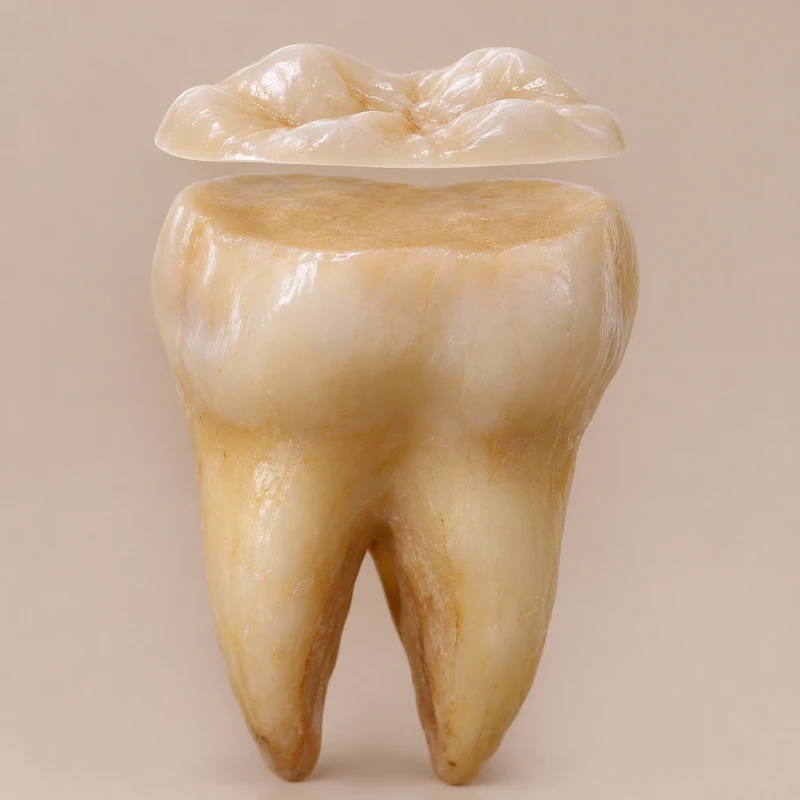
A thin overlay restores shape to a flattened biting surface. Much of the tooth’s original side walls can be preserved.
A full crown also surrounds the sides of the tooth. The choice depends on remaining tissue, available space and existing fillings.
Closing and moving sideways create different contacts. The new surface needs to fit the opposing teeth.
On the chewing surface of a back tooth.
A bonding system matched to the material attaches it to the tooth.
The cause of wear, such as acid exposure or mechanical loading.
Three steps. No audio.
Each scene can also be selected manually.

Silent film with English on-screen text and simplified teaching images.
A conventional veneer mainly covers the visible front of a tooth. A tabletop restores the form of a load-bearing chewing surface.
The dentist assesses the extent and progression of wear and any symptoms. Monitoring and managing the cause can be reasonable for a small stable defect.
Options include ceramics and certain composite-based materials. Space, loading and the available bonding surface guide the choice.
Clinical studies track outcomes over limited periods. No fixed lifespan can be given for an individual tooth. Chipping and loss of bonding are possible complications.
When teeth look shortened or flattened
What caused the wear, and which parts of my tooth could be preserved with an overlay?
Meet Dr. Niusha Barahmand Pour ↗An inlay sits mainly within the cusps. An occlusal overlay can cover and restore worn cusp form.
Editorial research: . General information, not an individual diagnosis or treatment recommendation. Teaching illustrations are simplified and do not depict a patient case.
If you turn this on, this website stores which guides you open, separately from advertising preferences. The markers expire after a fixed 30-day period from activation. The list is not sent to us by this feature. You can turn it off here and delete the markers.
Other people using the same browser profile can also see the markers. German and English versions share one marker. Expired entries are removed the next time you open a page with this feature; deleting browser data may remove them earlier. “Viewed” means opened, not read or completed.