How might I notice it?
A tooth may look longer or tilt forwards.

Teeth that lose some of their support can tip, fan out or move out of alignment. This acquired movement can occur in advanced periodontitis.
For training & practice ↓
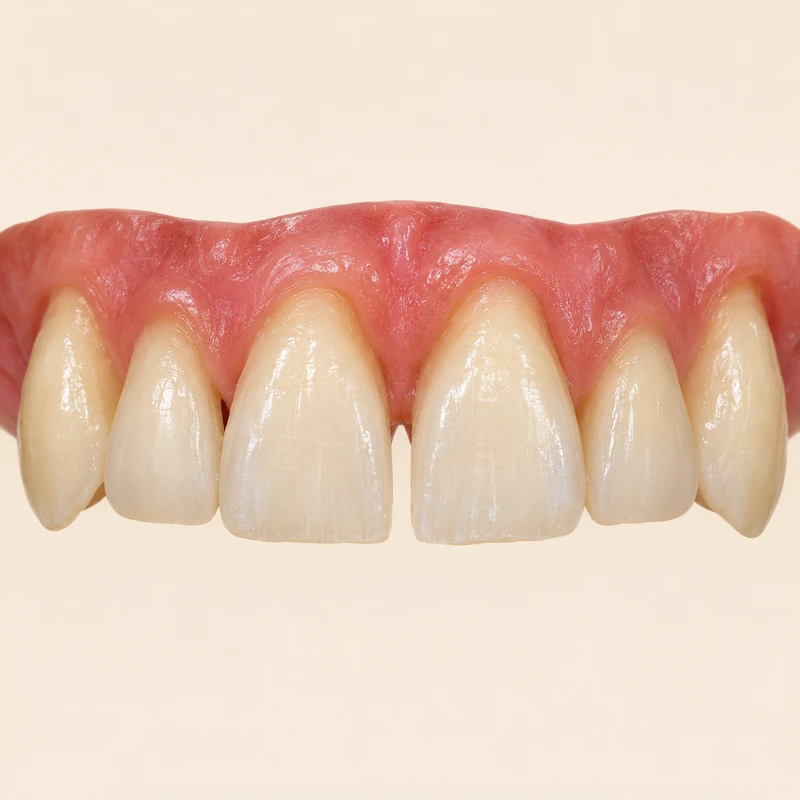
A long-standing gap and one that has appeared recently have different histories. Older photographs can help document the change.
The periodontal ligament and bone anchor the tooth. When periodontal support is lost, ordinary forces can contribute to tooth movement.
The periodontal condition is assessed and treated first. Once sufficiently stable, the team can consider whether orthodontic correction is suitable.
A tooth may look longer or tilt forwards.
A stable gap can be a natural feature.
Inflammation and loss of support need separate assessment.
Three steps. No audio.
Each scene can also be selected manually.

Silent film with English on-screen text and simplified teaching images.
Mobility is movement during examination. Migration is a change of position over time.
Earlier photos, casts or the approximate time the gap appeared can help.
Spontaneous correction cannot be predicted. Position is reassessed once inflammation is controlled.
Retention and periodontal maintenance form part of long-term planning.
A question to bring along
Has tooth support changed as well as tooth position?
Arrange an assessment for a new gap or loose tooth.
Choose an appointmentAppointment selection at DoctolibAssessment considers tooth position and periodontal support. A single picture cannot establish progression.
Editorial research: . General information, not an individual diagnosis or treatment recommendation. Teaching illustrations are simplified and do not depict a patient case.
If you turn this on, this website stores which guides you open, separately from advertising preferences. The markers expire after a fixed 30-day period from activation. The list is not sent to us by this feature. You can turn it off here and delete the markers.
Other people using the same browser profile can also see the markers. German and English versions share one marker. Expired entries are removed the next time you open a page with this feature; deleting browser data may remove them earlier. “Viewed” means opened, not read or completed.